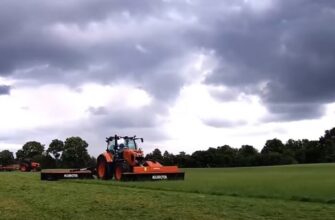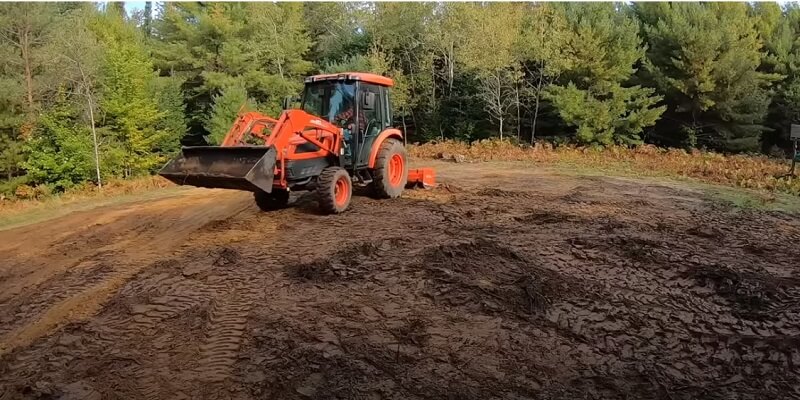
Leveling the ground with a tractor involves a series of steps to create an even and smooth surface.
It starts with preparing your tractor and choosing the right attachment, such as a blade or dozer. Make sure you wear protective equipment, including eye and hearing protection. Measure the surface, pay attention to high and low areas, and adjust the depth and angle of the attachment.
Start leveling by driving the tractor smoothly, slightly overlapping each pass. Fill in low areas, redistributing soil from high areas. Repeat the process as necessary until the surface is sufficiently level. Use a hoe or roller to further level and compact the soil, if necessary. Afterward, clean and store the equipment for future use.
Leveling Land With A Tractor
To level your yard with a tractor, you will need to carefully choose the appropriate attachment, assess the terrain’s condition, adjust the tractor settings accordingly, and follow a systematic approach to achieve a smooth and even surface.
Leveling a yard can seem daunting, but transforming your outdoor space is an enjoyable project with the right tools and a well-thought-out plan. Over the years of working on various landscape projects, I have learned the importance of a level yard. In this article, I will share my experience and knowledge on effectively leveling a yard with a tractor.
The Steps Of Leveling The Ground With Tractor Attachments
Yard Assessment
In my experience, the first step to leveling a yard is an assessment. Every yard is unique and has its own set of challenges.
Start by walking around the yard, observing its high and low points. Note areas that collect water or appear uneven.
This initial assessment will guide your approach to leveling and help you determine the right tools for the job.
Best Tractor Attachment For Leveling Soil
To effectively level your yard with a tractor, you need the right attachments designed to level and grade the area. Here are a few examples that you can use:
- Box blade: A box blade is a versatile attachment that is commonly used for leveling yards. It consists of a box-shaped frame with metal teeth or cutting edges. The box moldboard is attached to the rear of the tractor and can be adjusted to control the depth and angle of the cut. It is ideal for breaking up soil clods, redistributing material, and creating a smooth surface.
- Land plane: A ground plane, or a leveling or leveling blade, is designed to create a level surface by cutting high points and filling low areas. It usually has several adjustable blades that can be set at different angles. The rake attachment is effective for finishing and achieving a perfect slope.
- Grading rake: A planning rake, also called a landscape rake, has sturdy tines that can be adjusted at different angles. It spreads and levels soil, gravel, and other materials. The grading rake breaks up soil and spreads it evenly throughout the yard.
- Laser Grading System: You can opt for a laser grading system for precise leveling. This advanced technology involves a laser receiver attached to the tractor and a laser transmitter mounted at a reference point. The laser guides the movements of the tractor, ensuring high precision and uniform slope.
- Drag Harrow: A drag harrow is a simple device with metal tines that can be dragged across the yard surface. It is effective for breaking up soil clods and leveling the topography. Although not as powerful as other attachments, a towed harrow can work well for smaller yard-leveling projects.
- Power Rake: A power rake, also known as a soil ripper or chopper, can help prepare the soil for leveling by removing straw, debris, and rocks. It also breaks up compacted soil, making it easier to create a level surface for other attachments.
- Roller compactor: After initial leveling, a roller compactor can compact and settle the soil. This attachment helps to achieve a more compact and stable surface, which is especially important in high-traffic areas.
When choosing an attachment, consider the size of your yard, the degree of leveling required, and the terrain you are working with.
Debris And Vegetation Removal
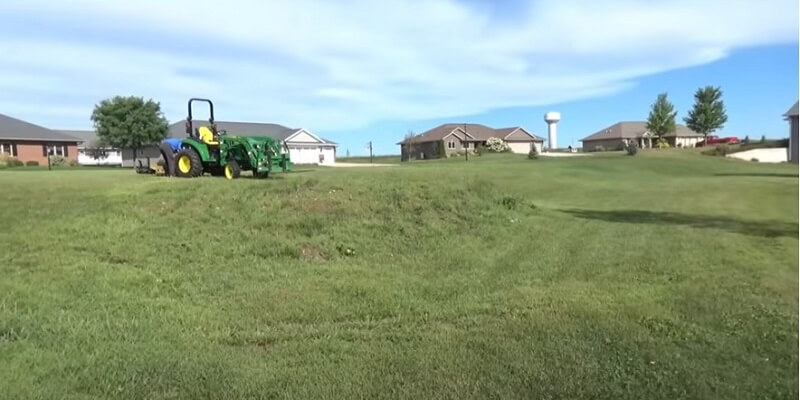
In my experience, clearing the yard of debris and vegetation is an important step before you begin leveling with a tractor.
Remove any rocks, sticks, or other debris that could block the tractor’s path or damage the attachment. Large rocks, in particular, can damage your leveling equipment, so take the time to remove them by hand.
It is also recommended that any significant vegetation be removed. Mowing the grass beforehand can make the job easier and help you see the terrain better. If there are bushes in the area you plan to level, trim them so you don’t damage them or the tractor.
My experience has taught me that a clean, debris-free work area makes for safer operation and allows your tractor to do its job efficiently. A clean blade can also achieve a more accurate and level yard.
Marking The Desired Level
In my experience, marking the desired level in your yard is a crucial step in the yard leveling process. Before you engage your tractor, carefully assess the high and low points of the terrain. These natural variations can affect the overall effectiveness of your pumping efforts.
I have found that using stakes and rope is an effective way to mark your desired grade.
Place stakes at different points in the yard and string a rope between them.
This creates a visual guide that helps you maintain a consistent level while working on your tractor. Remember that the accuracy of your markings will directly affect the final results, so take the time to make this preparation.
Adjusting Tractor Attachments
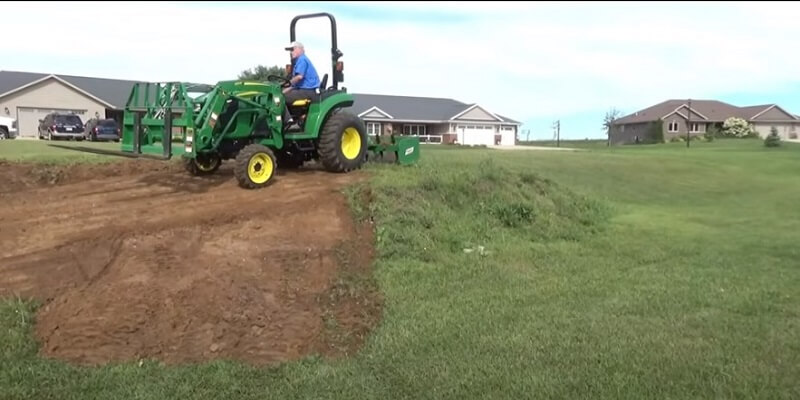
The type of attachment you choose – whether it’s a box blade, ground planer, or rake – depends on the severity of the unevenness in your yard.
When attaching the planing implement, ensure it is securely attached to the tractor. Take time to adjust the depth and angle of the attachment according to the marks you’ve made. This level of precision is necessary to achieve the desired results.
Periodically recheck the attachment settings during operation. Adjustments may be necessary to address different areas of the yard that require different degrees of alignment. A proactive approach to these adjustments will create a more even and uniform surface.
Level Ground With A Tractor Blade
While operating a tractor with an attachment, make slow, leisurely passes through the yard. The leveling tool breaks up soil clods, redistributes material, and helps create a smoother, more uniform surface.
As you progress, watch the string markers you’ve placed. This will help you maintain alignment and achieve an accurate level throughout the yard. If you notice any exceptionally high or low spots, you can adjust the tractor controls to eliminate them. Reverse the tractor and attachments to make passes in the opposite direction. This helps to smooth the surface further.
Remember that patience and attention to detail are critical during this step. Taking time and carefully assessing the yard will give you better results than rushing.
The goal is to create a surface that is not only level but also ready to support healthy grass growth.
Here are a few examples of how members of the GreenTractorTalk, and TractorByNet forums have shared their experiences and recommendations for leveling a yard with a tractor. These examples demonstrate different perspectives on yard leveling with a tractor, showing the experiences and strategies of different forum members. Be sure to adapt these experiences to your specific project, considering the size of your yard, terrain, and personal preferences)).

Checking Your Progress
Pausing regularly to assess how your work is shaping up allows you to make adjustments as needed. I recommend stepping back and looking critically at the yard from different angles to catch the slightest inconsistencies.
As you work on your tractor and leveling device, keep a close eye on the markers you have set up. These markers serve as a guide to maintain the desired level. If you notice any deviations, adjust the tractor controls accordingly. It is worth noting that achieving a perfectly level yard is not always possible, but the goal should be to strive for a smooth and level surface.
Fine-tuning The Surface
Fine-tuning the surface is an often-overlooked but important step in the yard leveling process, based on my experience. After the initial assessment, you will likely encounter areas that need extra attention. High and low spots may become more obvious as the yard takes shape.
High spots can use a leveling nozzle to gently break up and redistribute the soil. Low spots may require the addition of soil or other suitable materials to bring them to the desired level.
Patience and precision are key at this stage, contributing to a better and more professional-looking result.
Seeding And Fertilizing
Seeding and fertilizing a leveled yard is the next step in the process, and in my experience, it can greatly impact the long-term success of your project.
A newly leveled and smooth surface provides the perfect canvas for new grass to grow.
Before seeding, I recommend lightly loosening the soil with a rake. This creates favorable conditions for grass seeds to take root. Choose grass seeds suitable for your region and yard conditions. Spread the seeds evenly over the yard with a spreader, then lightly loosen the soil to cover the seeds.
Fertilization is equally essential as it provides the nutrients for healthy grass growth. I recommend choosing a balanced fertilizer that includes nitrogen, phosphorus, and potassium. Depending on your grass type and regional climate, follow the manufacturer’s application rate and timing recommendations.

Watering And Care
In my experience, the path to a level yard doesn’t end with grading and seeding.
Proper watering and care are essential to ensure the long-term success of your efforts. After seeding, keep the soil consistently moist to encourage germination. I recommend using a mild spray or mist on your hose to avoid seed displacement.
As the grass grows, gradually adjust your watering schedule to encourage deeper root development. This will result in a healthier and more resilient lawn. However, be careful not to overwater, as this can lead to disease and shallow root growth.
Regular maintenance tasks such as mowing, fertilizing, and weeding should become part of your routine. I recommend mowing on a higher setting to promote stronger root growth and shade out weeds. Also, periodically fertilize your yard according to the needs of your particular grass type and regional climate. Weeding is crucial to prevent unwanted plants from entering your newly leveled yard.
Different Attachments And Their Benefits:
1. Box Blades
- Advantages: Versatile for both rough and fine leveling, equipped with rippers to loosen soil, relatively affordable.
- Best Uses: Effective for initial and fine leveling, removing small obstacles, and redistributing soil.
2. Ground Levelers
- Benefits: Provides consistent leveling, adjustable settings for accuracy, and levels soil without aggressive cutting.
- Best Uses: Good for large areas, providing a level surface without excessive soil removal.
3. Grading Rake
- Benefits: Great for rough grading, breaking up clods, and evenly distributing materials.
- Best Uses: It is suitable for areas with loose soil, spreading materials such as gravel, and preparing surfaces for other treatments.
Level A Yard With A Tractor Bucket
You can use a bucket attachment on a tractor to level your yard efficiently. The bucket’s adjustable angle and depth allow you to scoop, spread, and redistribute soil, creating a smoother and more even surface. By carefully maneuvering the tractor and bucket, you can address uneven areas, fill in low spots, and achieve a uniform yard appearance.
Versatility And Nuances
Box moldboards are versatile due to their scarifiers, making them suitable for loosening hard soil, spreading materials, and achieving various levels of grading. However, its aggressive nature may require careful monitoring to avoid over-cutting.
Ground planners provide accurate and consistent leveling, but they can have problems with compacted soil or large obstacles. They are great for getting a smooth and level surface.
Grading rakes are great for roughly sorting and spreading material. However, they may not provide the same level of precision as box moldboards or land levelers.
Disadvantages
- Box blades can be prone to over-cutting if they are not properly controlled, which can lead to uneven results.
- Land levelers may encounter problems in areas with over-compaction or uneven surfaces.
- Land leveling rakes may not provide the same level of precision for fine leveling compared to box cutters or ground levelers.
Conclusion
The attachment choice depends on the project’s scope, site conditions, and the desired outcome. The box blade is the most versatile due to its ability to perform coarse and fine profiling, making it suitable for various projects. However, understanding the nuances and limitations of each attachment is necessary to achieve optimal results. You can successfully level the land to your specifications by following a systematic approach, assessing the terrain, choosing the right attachment, and adjusting your methods.
Frequently Asked Questions (FAQ)
Is yard leveling with a tractor suitable for all types of terrain?
Leveling with a tractor can be adapted to different landscapes, but the approach may vary.
Can I rent a tractor for this project?
Absolutely!!! Many equipment rental companies offer tractors and attachments for yard projects.
How long does the leveling process typically take?
The timeline depends on the size and complexity of the yard, but it can take a day or a weekend.
Should I level my yard before or after the rainy season?
It is best to level before the rainy season so newly seeded grass can benefit from the moisture.
Can I level my yard with one lawn mower?
While a lawn mower can help a little, tractors with specialized attachments provide better results.