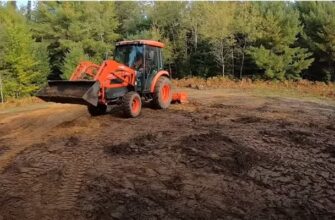
Key points when selecting a blade tractor:
- Determine the intended use of the implement tractor, and consider the type of blade that is appropriate for your application (rear blade, grader blade, box blade for tractor, etc.).
- Make sure that the size and width of the implement is compatible with your tractor.
- Pay attention to the ability to adjust, for example, the tilt angle and height of the blade.
Farming operations rely on tractor blade implements as vital tools for increased efficiency and flexibility. Thanks to their capacity for land preparation, soil management, seedbed preparation, and crop care duties – farmers are better able to maximize operations and achieve higher productivity with this handy piece of machinery.
Tractor blades offer many advantages to farmers, helping them complete a variety of tasks quickly and efficiently. Here, we explore their features and benefits as a tool that increases farm productivity.
How to choose a blade implement tractor: Suitable applications
When choosing a blade implement tractor, there are several factors to consider to make sure you choose the right implement for the job.
Here are some key points to keep in mind when choosing:
- Intended use: Determine what specific tasks you need the blade implement for. Different implements are designed for different tasks such as grading, leveling, snow removal, landscaping, or moving materials such as dirt and gravel.
- Blade Type: There are different types of blade implement, including rear blade, grader, box blade for tractor, snow blade, and others. Each type has its own design and features suitable for specific tasks. Rear blades are versatile and are great for leveling and grading, while box blades for tractors have additional features like scarifiers for more intensive ground preparation.
- Size and width: Consider the size and width of the blade depending on the power and capabilities of your tractor. Make sure to match the size of the implement tractor’s hitch category and drawbar power.
- Adjustability: Look for blades with adjustable features such as blade angle, height, and offset. These adjustable features allow you to adjust the implement’s operation depending on the task at hand and the terrain you’re working on.
- Durability and construction: Look at the quality of blade materials. Choose implements made of strong materials such as steel to ensure strength and durability, especially if you will be using the implement for heavy work.
- Compatibility: Make sure the blade implement is compatible with your tractor’s hitch system. Different implements may require certain hitch categories or adapters to attach to your tractor.
- Brand Reputation: Consider the reputation and reliability of the manufacturer. Look for brands that have a proven track record of producing high-quality implements and providing good customer support.
As for the appropriate application, here are a few general recommendations:
- Rear blades are versatile and suitable for grading, leveling and grooming gravel paths.
- Grader blades are great for precision grading and leveling.
- Box blade for tractor are ideal for more intensive ground preparation, grading and leveling, with additional features such as scarifiers to break up compacted soil.
- Snow blades are designed specifically for clearing snow and shoveling it to the side.
- Specialized implement tractors, such as rakes, cultivators, and rotary cutters, are suitable for specific landscape and agricultural tasks.
Keep in mind that the suitability of an implement for a particular task may depend on factors such as soil conditions, terrain, and the size of the area to be worked.
When selecting a blade to implement a tractor, we recommend reading product specifications, and testimonials, and getting expert advice to ensure the best fit for your specific needs.
Best Rear Blade for Tractor
MotoAlliance Impact Implements CAT-0 Rear Grading Blade, 52-inch Width

The MotoAlliance Impact Implements CAT-0 Rear Grading Blade is a high-quality and versatile implement designed to enhance your grading and leveling tasks. With its durable construction and efficient design, this grading blade is a valuable addition to your tractor’s arsenal. With its 52-inch wide blade, constructed from robust 8-gauge steel, it can withstand rigorous use and handle various grading tasks with ease.
The 10-gauge main frame tube adds further strength and stability to the blade, ensuring long-lasting performance even in demanding conditions.
The cutting edge is designed to be reversible and replaceable, allowing you to extend the life of the blade and maintain optimal performance. Whether you need to push, level, or grade, the sharp cutting edge ensures precise and effective results.
Please note that the MotoAlliance Impact Implements CAT-0 Rear Grading Blade requires a CAT-0 system (not included) to be installed on your machine.
Specifications:
- Blade Width: 52 inches
- Frame Material: 8-gauge steel
- Main Frame Tube Material: 10-gauge steel
- Cutting Edge: Reversible and replaceable
- System Compatibility: Requires CAT-0 system (not included) installed on the machine
- Mounting: Integrated 3 Point CAT-0 quick mount
- Assembly: Assembly required
Uses:
- Garden Tractor
- Lawn Tractor
- Any vehicle with a CAT-0 Hitch / 3 Point Attachment System installed
- NOTE: CAT-0 is defined as Tractor Power up to 20 hp (15 kW)
Best Box Blade for Tractor
Brinly BS-381-A Sleeve Hitch Tow Behind Box Scraper: Versatile and Durable Landscaping implement

The Brinly BS-381-A Sleeve Hitch Tow Behind Box Scraper is a compact and durable implement designed for landscaping, gardening, and various yard projects. With its heavy center-mounted C-frame and carbon steel construction, this box scraper ensures reliable use year after year.
Its compact design allows it to easily maneuver through tight spaces, making it ideal for landscaping, gardening, and other yard projects. This box scraper is built to withstand heavy use and tough conditions.
The box scraper boasts a versatile two-in-one design. The side plates and scarifier bar can be easily removed, transforming the box scraper into a rear blade. This feature provides flexibility for grading, backfilling, or moving materials like dirt, snow, and gravel. It allows you to adapt the implement to different tasks, enhancing its functionality.
To tackle tougher grading and leveling projects, the box scraper includes a weight tray. This tray enables you to add additional weight, providing enhanced stability and performance. With the added weight, you can achieve better results even in challenging terrain.
The scraper/blade of the box scraper can be angled up to 30 degrees in either direction. This versatile feature gives you the option to push material instead of pulling it, depending on the requirements of your project. The adjustable angle provides greater control and maneuverability, allowing you to work more efficiently.
To use the Brinly BS-381-A Sleeve Hitch Tow Behind Box Scraper with your tractor, a sleeve hitch is required (not included). The blade easily hooks up to any sleeve hitch, enabling secure attachment and efficient operation. Please ensure compatibility with your tractor and acquire the appropriate sleeve hitch, which can be purchased through your tractor manufacturer.
Specifications:
- Working Width: 38 inches
- Construction: Carbon steel
- Two-in-One Design: Box scraper with removable side plates and scarifier bar
- Weight Tray: Allows for additional weight to be added
- Angle Adjustments: Scraper/blade can angle up to 30 degrees in either direction
- Sleeve Hitch Requirement: Sleeve hitch required for use with your tractor (not included)
- UTV/ATV Compatibility: Can be used with the Brinly One-Point Lift (Models: OPL-BH/OPL-BH-A)
- Made in the USA: Built by Brinly-Hardy Company since 1839
Usage note:
- Once the box scraper is properly adjusted and installed on the tractor, you can perform many different operations, some of which are: leveling dirt and gravel, spreading loose material piles, filling small holes, clearing debris, removing snow, scarifying, etc.
NOTE: The box scraper is not recommended for use in reverse gear.
- The speed of the tractor when operating the unit should be adjusted to suit the task at hand.
- When leveling or grading, do not attempt to cut excessive amounts of hard material at high speed.
- When leveling or grading hard ground, the use of a scarifier is recommended to break up the surface or gravel layer.
NOTE: Operate at such a speed that loose material accumulated on the face of the machine settles on low areas.
- Weight (concrete/patio blocks, etc.) can be added to the tray and secured with ties through holes in the flanges of the tray.

Types of blade implement tractor
Blade implement tractor come in a variety of types, each of which serves a specific purpose in agriculture. These attachments increase the functionality and versatility of tractors, allowing farmers to effectively perform a wide range of tasks. In this article, we’ll take a look at the different types of blade attachments available for tractors and their respective applications in agriculture.
Box blades
Box blades are popular and versatile blades designed for grading and leveling tasks. They have a box design with adjustable raking teeth on the front and rear blade. Box blades are great for creating smooth and level surfaces, making ideal for using box blade on gravel driveway, walkways and arenas. They are also effective at spreading and leveling materials such as soil, gravel and sand.
Rear Blades
Rear blades, also known as grader blades or rear graders, are widely used for grading and leveling. These blades consist of a straight or slightly curved blade that can be tilted to the left or right. Rear blades are easily adaptable and are commonly used for maintaining roads, fields and other surfaces. They are also effective at clearing light vegetation, removing snow, and backfilling ditches.
Ground planers
Ground planers or ground levelers are blade implement tractor specifically designed to create flat surfaces and remove protrusions. They have a wide, flat blade that spans the entire width of the attachment. Ground planes are indispensable for ground preparation and renewal because they eliminate surface irregularities and improve water drainage. They enhance crop growth by providing a level playing field.
Rotary Cutters
Rotary cutters, also known as bush cutters or brush cutters, are cutting implements that are primarily used for vegetation maintenance. These attachments consist of several rotating blades placed in a metal deck. Rotary mowers are great for mowing and clearing dense vegetation, including tall grass, weeds, bushes and small trees. They are indispensable implements for maintaining fence lines, clearing pastures, and controlling overgrown areas.
Front Blades
Front blades, as the name implies, are blades attached to the front of the tractor. They are typically used for pushing and moving materials. Front blades typically have a straight or tilted blade that can be raised, lowered and tilted as needed. They are a versatile attachment used for shoveling snow, leveling soil or gravel, and clearing debris. Front blades are especially useful in landscaping, construction sites and farms where precise control and maneuverability are required.

Using the tractor blade in agriculture
The blade tractor is a multifunctional implement that can be used for a wide range of agricultural tasks. From land preparation to maintenance work, it proves to be an indispensable asset for farmers. Let’s delve into some key applications of blade implements in agriculture.
Using a Box Blade to Clear Land, Preparation and leveling
One of the blade’s primary functions is land preparation. Equipped with a sturdy and adjustable blade, it can effectively clear vegetation, rocks and debris from the ground. By leveling out uneven terrain, it creates an optimal base for planting crops. The blade tractor can be adjusted to different depths, allowing farmers to adjust the ground conditions to meet specific crop requirements.
Soil management and conservation
Blade tractor implements also play a crucial role in tillage. They can be used to incorporate organic matter, such as crop residue or compost, into the soil. This process increases soil fertility and nutrient content, promoting healthy plant growth. The blade can also break up compacted soil, improving water infiltration and root penetration. Loosening the soil helps prevent erosion and helps retain moisture.
Seedbed preparation and seeding
Effective seedbed preparation is essential for successful crop formation. With the blade implement, farmers can create well-prepared seedbeds by breaking up clods, removing weeds, and leveling the soil surface. The adjustable blade allows for precise seed placement, optimizing seed-to-soil contact and germination rate. In addition, the blade implements can be equipped with a planter or seeder, allowing farmers to sow seeds or transplant seedlings accurately and efficiently.
Seed care and weed control
Once the crops have taken root, the blade tractor becomes invaluable for maintaining them. Farmers can use the blade to work the soil around the plants, improving aeration and nutrient availability. This practice promotes the development of the root system and promotes optimal crop growth. The blade tractor can also be used to cut or bury weeds, minimizing competition for resources and reducing weed pressure. By effectively controlling weeds, farmers can protect their crops and maximize yields.

My use of the compact but mighty Box Scraper
I recently had the opportunity to test the performance of a box scraper, and I must say that it exceeded my expectations. Despite its small size, this American machine showed unwavering strength and stability, handling hard clay with ease. But that wasn’t all – combined with a little rain or pre-wetting, the results were astounding.
My driveway, which was tightly tamped, was no problem for this box scraper. It effortlessly leveled the surface, breaking up the stiff lumps and leaving it perfectly flat. The sturdy construction of the scraper gave me confidence in its durability, and the installation process was seamless. I appreciated the simplicity and efficiency of its design.
Although my garden tractor may have been a bit underpowered for the device, the scraper proved its worth. Clearing garden areas became a breeze as the scarifier bar effectively shredded weeds, grass, and even uprooted small roots and rocks. The assembly instructions in the manual were exhaustive, making it easy to optimize the blade’s effectiveness.
It worked flawlessly behind my 1974 Cub Cadet 1250, a testament to its compatibility with various tractor models. Although it is a lightweight blade with no hydraulic pressure, I found that adding extra weight increased its performance.
If I wanted to make one minor point, it would be the design of the side “wings” with quick-release pins. To provide additional structural support, I decided to screw them rigidly to the blade. However, this little tweak didn’t hinder the overall perfection of the scraper.
Whether you need to treat a difficult surface or get your garden ready for a fruitful season, this scraper will live up to your expectations.
I’ve searched for information on the use of blade implements for tractors in various forums, including : MyTractorForum – Box Blade Discussion.

Overview of manufacturer’s implements for tractors
When it comes to blade tractor, three well-known manufacturers stand out: YITAMOTOR, MotoAlliance and Brinly. Each brand offers its own unique features and qualities, satisfying the diverse needs of tractor owners.
YITAMOTOR is known for their commitment to innovation and advanced technology. Their blade implements feature advanced features and precise design, providing high performance and efficiency. With a focus on durability and functionality, YITAMOTOR products are designed to handle demanding tasks and achieve consistent results. The company specializes in providing a wide range of mouldboard implements that are suitable for various applications and tractor models.
MotoAlliance is a well-known manufacturer that places great emphasis on versatility and adaptability. Their blade implements are designed to be multi-functional, allowing users to perform a number of tasks with a single attachment. MotoAlliance products often feature interchangeable components, reversible cutting edges and adjustable angles for flexibility and convenience. With its commitment to quality and customer satisfaction, MotoAlliance has earned a loyal following among tractor owners.
Brinly, on the other hand, has a long-standing reputation for producing reliable and durable blade implements. The main focus is to produce high quality products that can withstand many years of use. Brinly blade implements are known for their rugged construction, heavy-duty frames, and precision leveling capabilities. By striving to manufacture its products in the United States, Brinly ensures that its implements meet the highest standards of craftsmanship.
When comparing the quality of these manufacturers’ products, it ultimately comes down to personal preference and specific requirements. YITAMOTOR excels in innovation, MotoAlliance excels in versatility, and Brinly excels in durability. All three brands prioritize customer satisfaction and offer products that meet a variety of needs. While YITAMOTOR and MotoAlliance specialize in different applications, Brinly specializes in knife implements for landscaping and gardening.
It is important to note that YITAMOTOR and MotoAlliance have production facilities in different countries, allowing them to serve the global market. Brinly, on the other hand, proudly manufactures its knife implements in the United States, emphasizing its commitment to quality and supporting local manufacturing.
Here are some of the website sources I used to write my article on the subject of implementing tractors:
MyTractorForum – Browse their discussion threads and special sections related to implementing tractors.
TractorByNet – Explore their tractor attachment forums and discussions.
YouTube – Search for channels or videos of tractors with moldboard implements for visual demonstration and understanding.
Conclusion
The availability of different types of blade implement tractors allows farmers to increase the efficiency and productivity of agricultural operations. Whether it’s the versatility of box knives, the adaptability of rear knives, the accuracy of ground planes, the vegetation management capabilities of rotary knives or the loading and unloading characteristics of front knives, each type of blade implement serves a unique purpose.
The wide range of blade implements ensures that farmers have the right implement for a variety of agricultural tasks.
A Box Blade Video
(FAQ) on Using Blade Implements for Tractors:
How do I choose the right size blade to implement for my tractor?
Consider your tractor’s horsepower, hitch category, and towing capacity when selecting a blade to implement. Match the implement’s size and width to your tractor’s capabilities.
What maintenance is required for blade implements?
Regularly inspect and lubricate moving parts, check for wear on cutting edges, and ensure proper alignment. Clean the implement after use and store it in a dry, secure location.
Do I need any special equipment to attach a blade implement tractor?
You may require a compatible hitch system or adapter specific to your tractor model. Refer to your tractor’s manual or consult with the manufacturer to ensure proper attachment.
How should I adjust the blade angle for different tasks?
Adjust the blade angle based on the desired result. Angling the blade to one side allows material to be pushed in that direction, while keeping it straight performs a level grading.
Can a blade implement be used on uneven terrain?
Yes, blade implements are designed to work on various terrains. However, it’s important to adjust the blade height, angle, and tractor speed accordingly to ensure optimal performance.
What are the safety precautions when using a blade implement?
Always follow the safety guidelines provided by the manufacturer. Wear appropriate personal protective equipment, operate the tractor at a safe speed, and be cautious of obstacles and bystanders.
Can I use a blade implement with any type of tractor?
Blade implements are available in different sizes and hitch categories to fit various types of tractors. Ensure compatibility between the implement and your tractor before purchasing.
Conclusion Ultimately, Tractor-Box and Rear Blade systems offer tremendous benefits in agricultural and land management operations. Their versatile attachments bring increased efficiency, precision, and versatility when applied to the tasks they were designed for.
The Tractor-Box system’s rugged construction and large carrying capacity make it an indispensable tool for hauling materials around a farm or construction site. Being capable of transporting soil, gravel, crops, and equipment more efficiently than manual methods does reduce time spent manually transporting these loads thus increasing productivity while cutting labor costs.
On the other hand, the Rear Blade attachment offers exceptional grading, leveling, and smoothing capabilities for driveway maintenance, field preparation, or reshaping landscapes. Its adjustable angle and depth settings enable operators to achieve precise results ensuring an even surface for planting, construction, or other activities resulting in improved land utilization and higher quality outcomes.
Both the Tractor-Box and Rear Blade systems demonstrate how technological advances have revolutionized agriculture and land management practices. When attached to tractors or similar equipment, operators gain access to versatile tools that expand their capabilities and enable them to take on various tasks quickly and efficiently.
Adopting innovations of this nature aligns with agricultural practices’ ongoing shift toward sustainability and resource optimization, decreasing manual labor requirements while producing more precise and uniform results, to reduce environmental impacts while simultaneously increasing productivity.
Tractor-Box and Rear Blade systems epitomize the marriage between technology and agriculture, providing solutions that address contemporary challenges associated with land management. As these attachments continue to adapt to ever-evolving needs, their role in shaping efficient and eco-friendly farming and construction practices becomes ever clearer.