To keep raccoons out of the garden, cover garbage cans, compost and pet food bins, pick ripe fruit in a timely manner, and plant less tempting vegetables such as herbs and hot peppers. Install fences at least 6 feet high and trim tree branches near fences to limit easy access. Use light and sound deterrents, motion-activated sprinklers or strobe lights. Don’t forget about hot cayenne pepper or garlic oil, either.
It’s Best to Keep Raccoons Out of the Garden
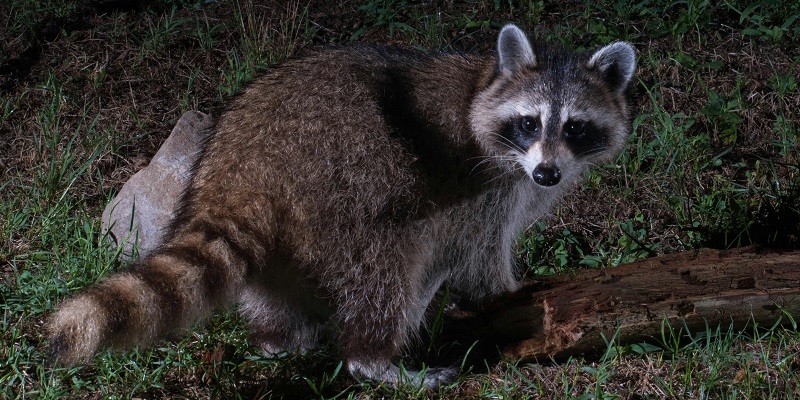
Raccoons can be real pests in the garden. They can damage plants, eat crops, and even enter your home. If you notice raccoons on your property, it’s important to take steps to ward them off.
Their nocturnal lifestyle makes them elusive and difficult to catch red-handed.
I ran into this problem myself a few years ago. Raccoons had taken up residence in my garden and started damaging the plants. I tried different repellent methods, and eventually, I managed to get rid of them.
In this article, I want to share my experience and tell you how to repel raccoons from the garden.
Signs of Their Presence
The first sign that raccoons have paid an overnight visit is often the sight of damaged plants and under-eaten vegetables. Those carefully cultivated tomatoes? Now the raccoon buffet. The frustration of having your hard work reduced to a midnight snack is unrivaled.
Raccoons leave behind their distinctive footprints – the grimy imprint of their mischievous antics. Combined with their not-so-subtle droppings, it seems they are scattering calling cards all over your garden.
Your beautifully mulched bed can turn into a chaotic mess overnight. Raccoons love to dig, whether in search of insects or just for fun.
Methods to Deter Raccoons
There are several ways to deter raccoons from the garden. Here are some of them:
Remove Access to Food and Water
Raccoons are not picky eaters. Their omnivorous nature means they eat anything from fruits and vegetables to insects and small animals.
- Raccoons have an uncanny ability to sniff out the best food sources, and gardens are at the top of their list. Lush vegetation, ripe fruit, and an abundance of insects create an irresistible attraction for these masked gatherers.
- Raccoons are primarily attracted to food odors. Therefore, it is important to remove all food sources from the garden, including garbage cans, bird feeders, and leftover fruits and vegetables.
- When I first noticed raccoons in my garden, I removed trash cans from the property. I also covered the bird feeders and started picking up leftover fruits and vegetables so the raccoons couldn’t find them.
- These measures helped reduce the attractiveness of my garden to raccoons, but they didn’t have a complete effect. Raccoons still continued to show up in the garden, but less frequently.
Regular fruit and vegetable picking not only ensures you have a bountiful harvest, but it also takes away the attractiveness to raccoons. Also, by securing garbage cans with tightly closing lids and, if possible, elastic cords or clips, you will prevent raccoons from accessing this easily accessible food source.
Use Repellent Devices
Various repellent devices can help deter raccoons. These can be ultrasonic repellents, light repellents, or odor repellents.
Many people use an ultrasonic repeller, which turns out to be quite effective. Here is an example of a good ultrasonic repeller.
RibRave Ultrasonic Animal Repeller Solar
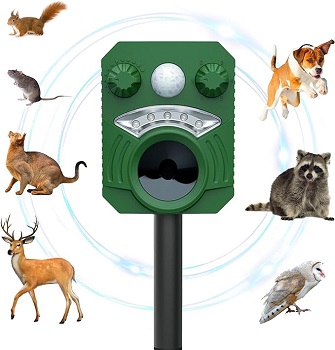
The RibRave Ultrasonic Animal Repeller Solar solar-powered ultrasonic animal repeller emits high-frequency sounds and flashing lights to repel squirrels, raccoons, deer, and even large animals like coyotes.
- The device utilizes a multi-frequency mode that activates when slow-moving objects are detected. The ability to adjust the frequency depending on the type of animal is a practical feature that allows you to customize the repeller to your needs.
- Solar-powered design eliminates the need to replace batteries, ensuring continuous operation. Waterproof features add durability, ensuring the unit can withstand a variety of weather conditions for 24/7 protection.
- Equipped with a motion detection sensor, scares animals only when they are nearby, saving energy and reducing annoyance to neighbors. The sensor’s high sensitivity, covering a wide angle and range of distances, contributes to optimal performance.
- The product is characterized by easy installation and the possibility of different placement options: on a wall, on a fence, or in the ground. This flexibility enhances ease of use.
- Animals it repels include coyotes, deer, wolves, foxes, raccoons, skunks, owls, and other nocturnal wildlife.
You can customize the beep and flash to target specific animals.
Build a Fence
If raccoons have already invaded your garden, you can build a fence that will be insurmountable for them. The fence should be at least 6 feet high and have fine mesh so the raccoons can’t get under it.
I did not build a fence as the raccoons were not a big problem on my property. Sometimes it may be necessary to install fencing in some of the beds.
Odors From Raccoons
Raccoons have a keen sense of smell and do not like pungent odors. Planting strong-smelling herbs such as mint, basil or rosemary around the perimeter of the garden acts as a natural barrier.
Predator urine, which can be purchased at garden stores, mimics the odor of natural predators such as coyotes or foxes. Raccoons, being intelligent creatures, interpret this as a sign to stay away. A few properly placed drops of predator urine can work wonders in scaring raccoons away and keeping them at bay.
Predator Guard Repel All

Predator Guard Repel All Liquid Super Concentrate is an eco-friendly pest control alternative that uses all-natural ingredients. Let’s take a look at its characteristics:
The product is formulated with all-natural ingredients and is an eco-friendly alternative to traditional pest control methods that can harm animals and the environment.
- The concentrated solution, designed for year-round use, acts as an insect repellent and animal repellent. Recommended application every 60 days or as needed, especially during heavy rains or increased pest and wildlife activity, adds convenience to home and garden routine.
- Designed for easy application by mixing with water and applying to desired areas. Flexible application methods including heavy-duty spray bottles, trigger bottles, or pressurized sprayers increase ease of use.
- Enriched with natural peppermint essential oil, the spray emits a distinctive, long-lasting scent that affects the sensory receptors of a variety of pests such as rats, mice, mosquitoes, cockroaches, and spiders. The use of natural odor and taste receptors aims to deter larger animals such as foxes, skunks, raccoons, and bears, providing long-term protection for homes and gardens.
- Its versatility allows it to be used in a variety of applications, from repelling bears from homes to repelling mosquitoes in yards to being used as an all-natural bed bug spray in homes. It can be applied on the ground or around protected areas, protecting plants from animals.
Naturally, the peppermint scent may be too strong for some users. This may be due to personal preference, as strong odors can be subjective.
Implementing Motion-Activated Sprinklers
If there’s one thing raccoons dislike more than a foul odor, it’s an unexpected shower.
When sensors detect movement, a stream of water rushes out, giving raccoons a watery surprise they won’t soon forget. It’s a humane and effective way to protect your garden without causing harm.
Home Remedies to Repel Raccoons
Cayenne pepper spray or powder is a classic remedy in a gardener’s toolkit. Raccoons have a strong sense of smell, and the pungent odor of cayenne pepper is sensory overload for them.
They only need to encounter this product once to make sure they don’t want to touch your garden products. Heavy spraying or sprinkling in the garden creates an invisible barrier that prevents raccoons from exploring further.
Cayenne Pepper Powder Bulk 5 LB

Creating Noise and Light Disturbance
Raccoons, nocturnal creatures, don’t like unexpected shocks. Use your pet’s playtime or presence strategically to create noise disturbances.
Motion-activated lights can scare raccoons, making them think twice before exploring your garden. Periodically turning on a radio or making loud noises mimics human activity, signaling to raccoons that they are not alone in the garden.
Motion-activated lights are like silent sentinels, standing guard and catching raccoons off guard. Placing these lights in key areas of the garden disrupts their nighttime routine. In my experience, these luminous surprises have proven to be an effective deterrent in getting raccoons to reconsider their nocturnal antics.
Solar Nocturnal Animal Repeller
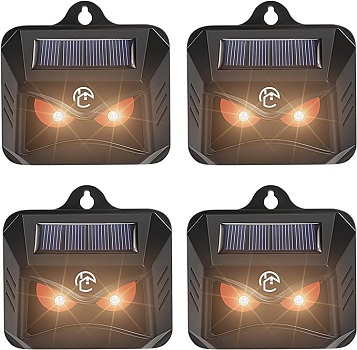
The Humane Animal Repeller from YAR Defense is not a bad solution for deterring nocturnal animals. It utilizes two red LED flashing lights that mimic the eyes of large predators, providing a humane method of repelling animals like coyotes, raccoons, and deer at night.
- Notably, the repeller is solar-powered, allowing it to charge during the day and automatically turn on at night. The unit provides 12 hours of continuous operation with only 5 hours of sunlight, providing an energy-efficient and environmentally friendly solution.
- The all-weather design with water resistance ensures operation in a variety of weather conditions, making it suitable for year-round outdoor use.
- The simple process involves pressing the power button on the back panel and mounting the repeller in multiple directions on poles, fences, or walls from 1 to 8 feet above the ground. This versatility in mounting height allows the system to adapt to different outdoor conditions.
The fixtures only illuminate a specific area, so if you have a large yard or the animals are particularly determined, you may need multiple fixtures.
Maintaining Cleanliness to Deter Raccoons
Cleanliness is more than just a virtue; it’s a strategic defense against raccoon invasions. Raccoons are less likely to explore a well-maintained garden where their presence is easily noticed.
Regularly sweeping paths, keeping your garden tidy, and maintaining a clean space give raccoons a clear signal that your garden is a well-protected area.
Additional tips:
- Here are a few more tips to help you keep raccoons away from your garden:
- Trim trees and shrubs regularly to keep raccoons from finding shelter.
- Caulk all holes and gaps in your home and fence that raccoons can get in through
Legal Considerations
Before embarking on any raccoon control measures, it is important to have a good understanding of local regulations governing wildlife removal.
Different regions have different rules and guidelines for handling and relocating raccoons.
Take precautions when scaring off raccoons:
- Do not attempt to repel raccoons on your own if they show aggression. In this case, it is better to contact a professional.
- Do not use dangerous substances or devices that could harm raccoons.
- If raccoons show aggression, you should not try to scare them away on your own. It is better to contact a professional who will help you get safely rid of these animals.
Also, you should not use dangerous substances or devices that can harm raccoons. This can lead to the death of the animals or seriously injure them.
Conclusion
In conclusion, it is important to note that there is no single method that is guaranteed to deter raccoons from the garden. The best way to succeed is to use a combination of appropriate methods for your particular case.