To keep chickens out of the garden, combine physical barriers (high fence, aviary), deterrents and training.
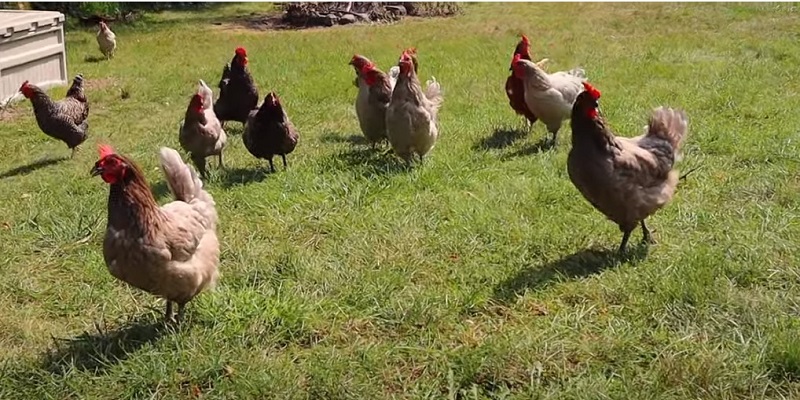
In my experience, chickens can be a big problem for a garden if given complete freedom. There are several reasons for the dangers of uncontrolled chickens in the garden.
First, these birds are capable of pecking at seedlings, eating my plants, sowing seeds, young sprouts, and flowers The result is significant bald patches, and scratching, instead of long-awaited plants in the bed.
In my experience, digging up mulch can be even more destructive. Chickens love to search the soil for grubs, worms, or stubs, and their beak and claws are ruthless. Torn-up soil becomes dense and barren, and plants wither.
In addition, chicken droppings in excess favor the spread of root rot, viruses, and infections.
Chickens are naturally drawn to scratch the soil in search of insects and bathe in dust for personal hygiene. This behavior, while instinctive, can wreak havoc on your garden if not stopped.
Ways to Keep Chickens Out of the Garden
There are several ways to repel chickens from the garden. These simple, but very effective methods in combination will reliably keep your garden and beds from being invaded and damaged by chickens. Tried and tested!
Fence
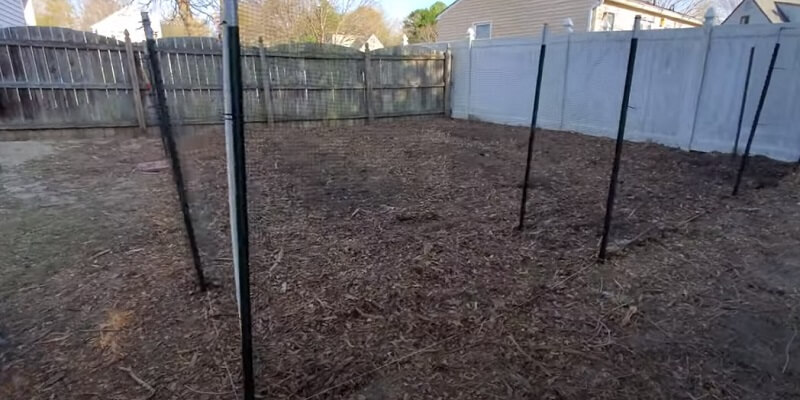
My experience has shown me that the most reliable way of protection is a high fence. I installed a 3-foot-high mesh fence, burying it 12 inches into the ground so the chickens couldn’t dig under it.
This kept the chickens from flying over and undermining the fence. One of the main points was that there was no top bar so the chickens couldn’t lean on it! The netting must be well-tensioned to prevent sagging. Otherwise, the chickens can get caught on the mesh and tear it. You can make a canopy at the top of the fence to prevent the chickens from flying over it.
My experience has shown that a fence height of at least 3 feet is optimal. Chickens do not fly well, but can easily jump over a low fence.
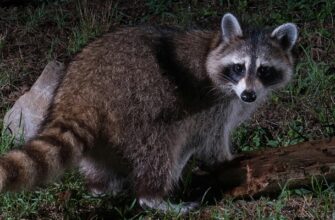
Also, such a fence will help protect your vegetable garden from chickens and other animals like rabbits, deer, skunks, and raccoons. From stray dogs and cats.
You can use different materials to build a fence:
- Mesh-rabica: the most affordable and simple option. However, rabbit netting is not very strong and easy to damage.
- Welded mesh is more durable and reliable than fence mesh.
- Wooden fencing is an aesthetically pleasing and environmentally friendly option. However, a wooden fence requires regular maintenance.
25 x 50 Ft Bird Netting with 2.4 in Square Mesh
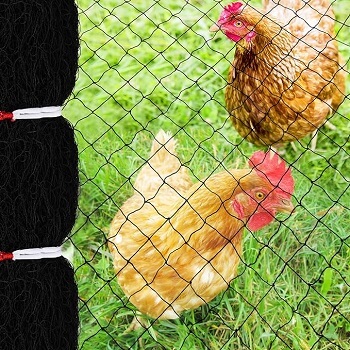
This bird netting is durable nylon and has a 2.4-inch square mesh. It’s designed to protect gardens, vegetables, and fruit crops from animals like deer, chickens, squirrels, and foxes.
- Durable and weather-resistant nylon construction
- Large size (25 x 50 ft) for ample coverage
- Easy to install with included cable ties
- Can be cut and customized for different areas
- Multipurpose: protects gardens, fruit trees, and chicken coops
Cage
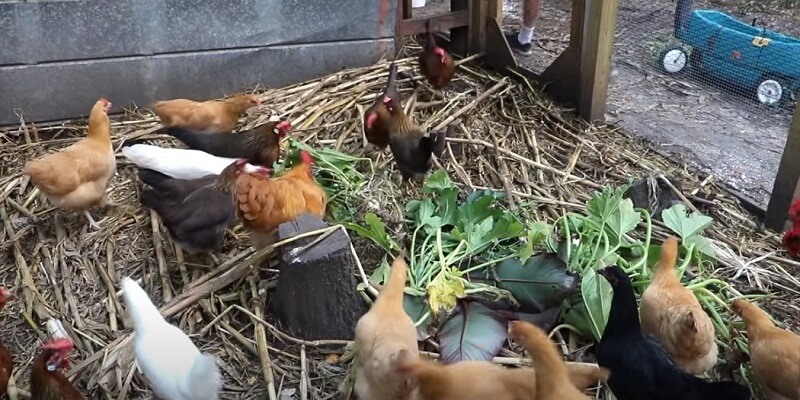
It should not be forgotten that chickens need space for walking.
So, I set up a spacious aviary for them with greenery, feeders, drinkers, and a bathing area. This way my feathered friends are always busy and don’t encroach on forbidden territory. This provides a place for them to walk, walk, and play, shielding the plantings from their “destructive” actions.
When choosing the size of the aviary, you should be guided by the number of chickens. On average, 1-2 m² of space is required per chicken. Chickens, like any other creatures, need space to spread their wings, both figuratively and literally.
The aviary needs to:
- Install feeders and drinkers. The number of feeders and drinkers should match the number of chickens. Feeders and drinkers should be clean and have access to fresh water and feed.
- Place perches.
- Provide a bathing area. Chickens love to bathe. You can use a basin filled with sand or ash for this purpose.
- Plant greenery. You can plant grass, alfalfa, clover, and other herbs in the aviary.
The shape of the aviary is not of fundamental importance, but it should be rectangular or square.
The aviary should be fenced with fencing, welded, or wooden fencing. The height of the fence should be at least 1.5 meters.
An aviary is a great way to provide chickens with space for walking and walking and protect your plantings from their “destructive” actions.
TMEE Large Chicken Coop
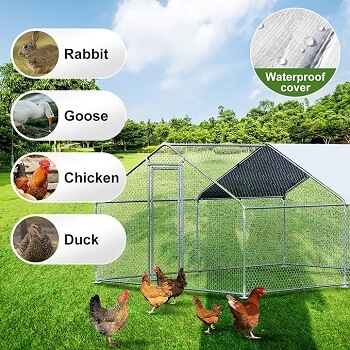
This TMEE chicken coop features a galvanized steel frame with PVC-coated hexagonal wire mesh walls and a waterproof PE cover. It’s designed to house a variety of poultry, including chickens, ducks, rabbits, and geese.
- Durable construction: Galvanized steel frame and PVC-coated mesh provide strength and rust resistance.
- Spacious interior: Offers ample space for multiple animals.
- Waterproof and UV protection: Cover protects from sun, rain, snow, and debris.
- Easy access: A lockable door allows for easy entry and cleaning.
Plant Netting
Plant netting is a simple and effective way to keep your seedlings, flowers, and beds free from feathered pests. It is easy to install and use, requires no special skills or tools, and does not harm plants.
When choosing a net, it is important to consider its strength and material (plastic, metal, nylon), as well as the size of the net – it should be fine enough that chickens cannot stick their heads through it.
Plant Fence Cage
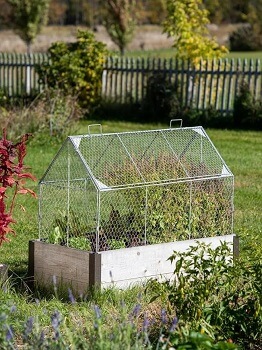
This lightweight plant cage (9 lbs) is made from rust-resistant steel wire and measures 22″ wide, 45″ long, and 28″ high. It’s designed to protect plants from animals like deer, rabbits, squirrels, and chickens.
- Easy to install and use
- Open roof panel allows for easy planting and harvesting
- Lightweight and easy to move
- Rust-resistant steel wire construction
- Large space coverage
Raised Beds
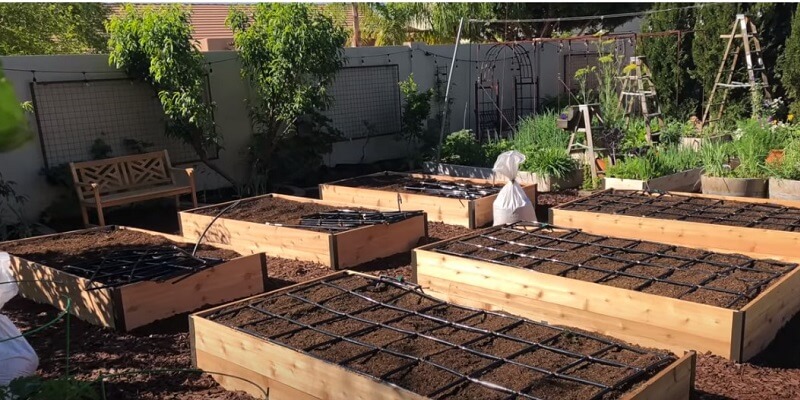
Use garden structures such as raised beds to create barriers that prevent chickens from scratching and digging in the ground. They can be your salvation!
A bed raised 28-40 inches above the ground becomes an insurmountable fortress that protects your succulent green treasures from feathered raiders. Chickens simply can’t fly that high, and they can’t dig into the ground beneath the bed because of the netting around the base.
All the more so, raised beds are an effective way to protect your crops from chickens and a great option for those who want to make their vegetable garden more convenient and beautiful.
How Else to Stop Chickens
While I don’t consider deterrents 100% effective, they can be useful if there is no fencing or as aids.
Visual
Visual deterrents include using a scarecrow and hanging shiny CDs around the perimeter of the vegetable garden.
A classic scarecrow can deter chickens for a while. You can use old clothes, sticks, and burlap to make it. The scarecrow can be made more effective by adding sound elements to it, such as bells, and periodically changing its appearance to keep the chickens energized.
CDs, foil, and tinsel can all scare chickens away with their glitter. You can hang bands about a centimeter wide, made of rustling bright silver foil. Such strips develop from the wind and produce a characteristic scary rustle.
Additional visual and sound effects are created by ordinary foil attached along the perimeter of beds and fences. Chickens are afraid of incomprehensible rustling and glare from bright silver stripes. Such signaling bands and foil are regularly changed for new ones. Otherwise, birds quickly get used to them. Shiny objects can be hung on trees, bushes, and fences.
Something else that works well is using various artificial stuffed birds of prey or other animals that cause fear instinct in chickens. These should be moved around the area periodically for the best effect.
Sound
The method with bells is effective. You create a sound barrier that will deter chickens by hanging bells on fences, trees, and bushes. The bells ringing will alarm the birds and make them stay away from the garden.
Of course, chickens can get used to the ringing over time, so it’s important to change their location or add new sound elements periodically.
Odors
Use strong deterrent odors along the fence and beds. Crushed garlic, chili peppers, or onions are great. The intense aroma will not appeal to chickens, but it will also deter pests. Refresh the flavors periodically.
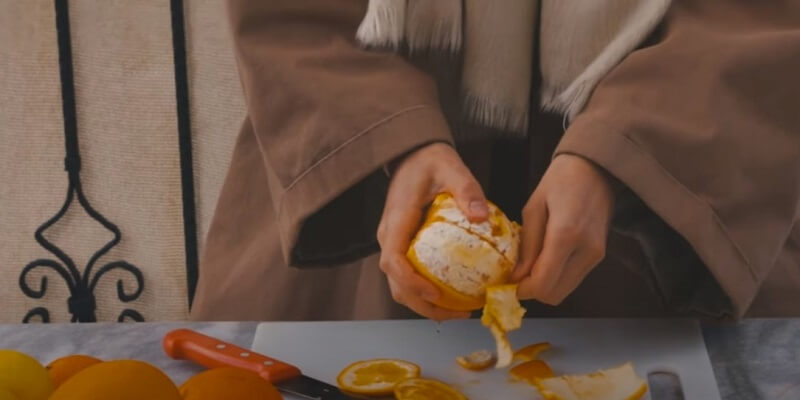
Citrus. By spreading orange, lemon or grapefruit peels in the vegetable garden, you can scare chickens away with their pungent odor. Most birds do not tolerate citrus fruits so that this method can be quite effective. You can spray the vegetable garden with water and citrus essential oil to enhance the effect.
Vinegar. You can dilute vinegar with water and spray the vegetable garden with it. Vinegar can have a pungent odor, which can be unpleasant for chickens.
Spices. Pepper, mustard and other spices can be effective, but their odor quickly disappears. You can spread spices in the vegetable garden or spray the vegetable garden with them. To increase the effect, you can mix spices with water and vinegar.
Repellents are not a panacea but can be useful as auxiliary measures.
Training
Training chickens is not easy, but with patience and perseverance it is possible.
Maintaining harmony between your garden and your feathered friends requires patient training of your feathered friends. Get your chickens accustomed to a specific feeding and walking area.
Chickens respond surprisingly well to rewards and positive affirmations. When they exhibit behaviors consistent with your desired outcomes (such as staying away from the beds), reward them with a treat or praise:
- Feed your chickens in the same place.
- Choose a spot in the vegetable garden where you will feed the chickens and feed the chickens in that spot at the same time every day, using the same utensils.
Tips:
- Put some treats in the feeder to attract the chickens.
- After feeding, move the chickens to an aviary or other place where they cannot access the vegetable garden.
- Be careful not to make any sudden movements so as not to frighten the hens.
- Close thedoor to the vegetable garden when the chickens are walking around.
Punishing chickens is a last resort and should only be resorted to in extreme cases. Physical methods of punishment such as hitting or spanking as this can be cruel and ineffective. Chickens can become intimidated and aggressive.
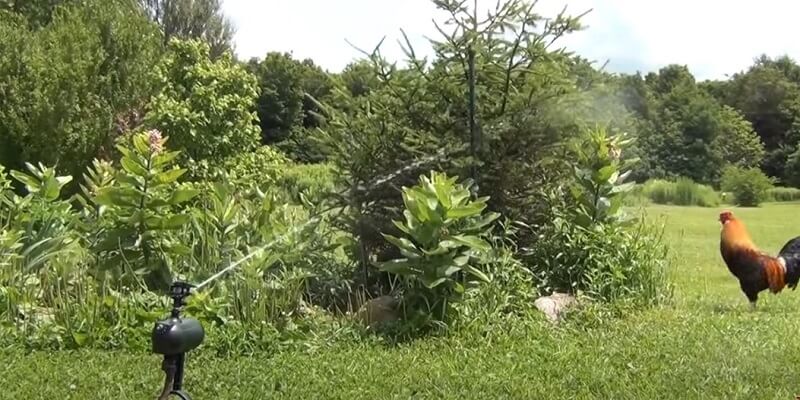
You can use splashing with water. When they enter the vegetable garden, use a sprayer to splash the chickens with water. Be careful not to get water in their eyes or beak. Over time, chickens will develop an association between the vegetable garden and the unpleasant sensation of water and will avoid it.
Make loud noises like clapping your hands, banging on a pot, or using a whistle when chickens enter the vegetable garden. Loud noises may scare the chickens away, but will not harm them. Over time, chickens will associate these sounds with not being allowed to enter the vegetable garden.
Important: Be consistent in your actions. When applying positive reinforcement, it’s important to realize that consistency is key. Chickens, like many animals, like routine and clear expectations. If you reward them for not going to the garden today and scold them the next day, confusion will result.
Chase the chickens away as soon as they enter the vegetable garden.
Training chickens is a long and laborious process, but it can yield positive results. Be patient and consistent in your actions. Use positive reinforcement techniques such as rewarding with treats. Avoid punishment and yelling.
Garden Plants That Chickens Don’t Like
Another good option is to plant plants with prickles, thorns, or a pungent odor that are unattractive to chickens.
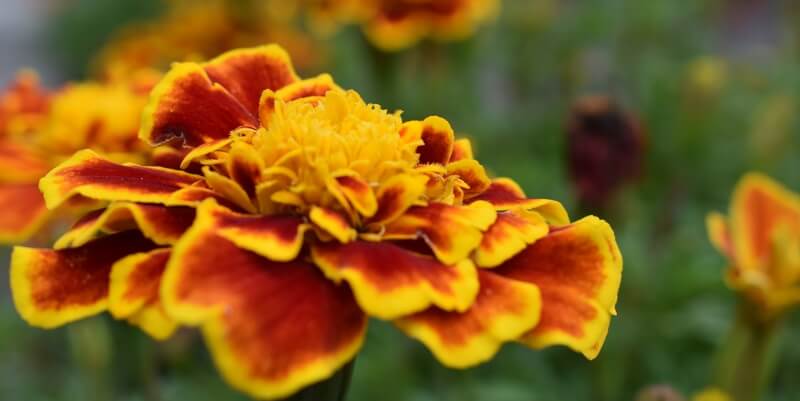
This can be, for example, barberry, rosehip, lavender, mint, or calendula. Place such crops along paths and beds. Such a living barrier will become a barrier for chickens to your garden plants.
Velvet, lavender, and rosemary are fragrant varieties that can be an excellent barrier. Hemeritzia is known for its stunning blooms and deer resistance. Chickens are also less likely to peck these beauties. They create a protective shield around your favorite plants, keeping chickens from getting too close.
Conclusion
My experience has shown that the most effective method of protecting the vegetable garden from chickens is a high fence as a reliable and long-term option, an aviary, which provides space for chickens and distracts them from the vegetable garden. If fences are not available, use additional methods of deterrence and training. Using different protection methods, you can save your vegetable garden and provide the chickens with the necessary conditions for life.