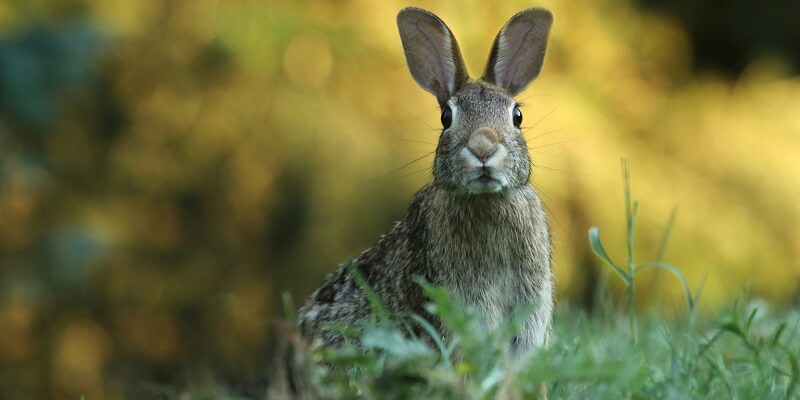
To keep rabbits out of garden, you need to take a comprehensive approach to the problem. Protect your garden with a fence, netting, or other barriers. Use deterrents, repellents, traps, dogs, or other methods, keeping in mind the humanity and legislation of your region.
Features of behavior and nutrition of rabbits:
Rabbits are social animals, and if one thinks your garden is a tasty refuge, others may follow suit. Rabbits are crepuscular creatures, meaning they are most active at dawn and dusk. They reproduce quickly females can bear up to 40 cubs a year.
- Rabbits love fresh vegetables, fruits, and berries. They are happy to eat greens, strawberries, carrots, and cabbage.
- The tender bark of young trees and shrubs is a tidbit for rabbits. They can nibble the seedlings to such an extent that they die.
- The love of rabbits to dig holes can lead to the formation of underground passages, which are fraught with failures and deformation of the soil.
So how do you keep rabbits out of the garden? In this article, I will share my experience and the most effective methods of protection:
- How to make a garden fence to keep out rabbits: reliable barriers that the furry pests won’t defeat.
- Preventive measures: tricks to keep rabbits out of your garden.
- Humane methods to deter rabbits: how to protect your crops without harming the animals.
To Fence Out Rabbits
The first and surest way to protect garden from rabbits is to erect a strong and impregnable fence around it.
The fence should be at least 60 inches high, or better 70 to 80 inches: Rabbits can jump, so do not underestimate their hopping ability.
Various materials can be used to build a fence:
- Metal mesh: a strong and durable option, but can be quite costly.
- Wooden post: a more budget-friendly option, but requires regular maintenance.
- Plastic mesh: a lightweight and affordable option, but less durable than metal mesh.
Expert opinion: wire mesh acts as a versatile and economical barrier. Make sure it extends below ground to prevent burrowing attempts and is high enough to deter a rabbit from jumping.
Additional tips:
Make sure there are no gaps or holes in the fence through which rabbits can enter the garden.
Inspect the fencing regularly for damage.
If you have pets, make sure the fence is not a danger to them.
Nets to Keep Bunnies Out of Garden
In addition to fencing, special nets can be used to protect trees, shrubs, and beds from rabbits.
For trees and shrubs:
- Plastic or metal nets can protect young saplings and tree trunks from nibbling by rabbits.
- The netting should be strong enough to prevent rabbits from tearing it.
- Secure the netting to the tree trunk or around the shrub with clamps or wire.
For beds:
- Special plastic netting can be used to protect beds from rabbits.
- The mesh should be fine enough that rabbits cannot get through it.
- Cover the beds with netting and secure it around the edges with stones or bricks.
The presented mesh option is a great solution to protect your garden from uninvited guests.
AlpineReach Bird Netting 7.5 x 100 ft
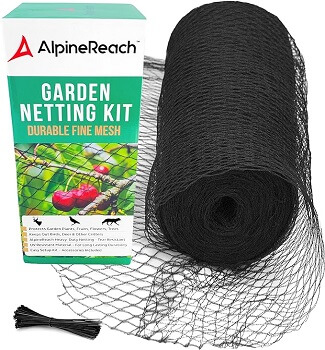
AlpineReach bird netting protects your plants from birds, deer, squirrels, rabbits, and other animals. The netting is bound from a strong material that combines strength and durability with lightweight construction.
Key feature:
- Heavy-duty (5/8-inch) woven mesh. This construction provides tensile strength, durability, and weather resistance.
- Versatile size (7.5 x 100 feet). Provides extensive coverage suitable for gardens of various sizes. Its versatility allows for easy customization – easily reduced to the right size for specific requirements for increased convenience.
- Protection from multiple animals. The fine mesh is a reliable barrier against unwanted visitors including birds, deer, squirrels, rabbits, and many others.
- Easy to handle. It can even be laid in layers to make a very thick barrier that will serve as an effective plant protection or mesh for a garden fence.
- Quick installation and time-saving. The netting includes zippered accessories that make installation quick and efficient.
What the nets are good for in my experience: Easy to install and remove. Do not require special maintenance. Do not harm animals. Transparent, so they do not shade plants.
Odors to Repel Rabbits
Rabbits have a compassionate sense of smell, so odors that are unpleasant to them can be an effective way to protect the garden.
You can buy special repellents to deter bunnies. These generally have a pungent odor that is unpleasant to rabbits but cannot be sensed by humans. Repellents should be sprayed around the garden’s perimeter or in the areas you want to protect.
Liquid Fence Deer & Rabbit Repellent Granular, White, 5LB
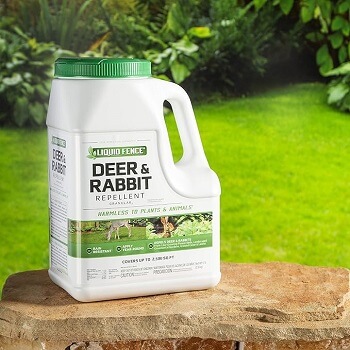
Granular deer and rabbit repellent are designed to deter these animals from eating vegetation in gardens and lawns.
- Repellent Effect: Odor repels deer and rabbits, even if they do not directly consume the treated vegetation.
- Granular Formula: Easy to apply to low-growing plants, flower beds, landscape areas, groundcovers, and lawns.
- Rain Resistant: Granules remain effective even after rain.
- Harmless to plants and animals: When used and stored as directed, the product is not harmful to plants and animals.
- Year-round use: Switching to other repellents is unnecessary as animal repulsion is long-lasting.
Home remedies
Protecting your garden from rabbits doesn’t always require a hefty budget or professional intervention. Savvy gardeners, have developed do-it-yourself solutions that are not only effective, but also give a personalized approach to fighting rabbit infestations.
Some home remedies can be used as repellents, such as:
Mothballs. Place mothballs around the perimeter of the garden.
Vinegar. Use a 1:1 solution of vinegar and water and sprinkle in areas favored by rabbits.
Garlic. The strong odor of garlic, garlic spray, does not attract rabbits, making it an excellent choice for creating a scent barrier. Homemade garlic spray applied around vulnerable plants protects against rabbit invasion.
Cayenne pepper. Rabbits have sensitive noses, and the pungency of cayenne pepper can be a powerful deterrent. Repeated applications, especially after rain, protect against rabbit intruders continuously.
Ammonia.
Citrus zest. Citrus scents from real citrus plants and essential oils can be an effective solution for rabbit protection. Experiment with lemon, orange, or grapefruit scents to find the one that works best for your garden.
Human hair. Scatter hair from a hair salon around the garden. Rabbits cannot tolerate human odor.
Expert opinion: homemade sprays with ingredients such as hot sauce, garlic or even a mixture of spices can be effective in deterring rabbits. The pungent odor and taste make your plants less attractive to these rodents. Spread or sprinkle these substances around the perimeter of the garden or around the beds.
Using Plant Scents
In addition to fencing and other methods of protection, another interesting method is to use plant scents that rabbits don’t like.
Peppermint. The strong odor of peppermint suppresses the olfactory senses of rabbits, making it an effective natural repellent.
Lavender. The pleasant scent of lavender changes rabbits’ habits, making it an addition to your rabbit-proofing toolkit. Plant it to create a scented rabbit-free zone.
Predatory Animals (hair, urine)
The odor of predatory animals can also deter rabbits. Mimics the presence of natural threats, triggering the rabbits’ prey instinct.
Dog or cat fur and fox or wolf urine can be used. Spread or spray these materials around the perimeter of the garden.
Egg-based repellents
One effective and affordable method of defense is the use of egg-based repellents.
The smell of raw eggs can deter rabbits, and this homemade egg repellent will add protein to your rabbit-proofing efforts. Regular application may be required.
What’s important:
The effectiveness of odor repellents can diminish over time. Repellents and other materials should be updated regularly.
Garden Repellents to Keep Rabbits Away
Garden repellers are designed to protect the garden from unwanted guests such as rabbits, rodents, birds, and other animals. They come in visual, sonic, and ultrasonic types. I have mentioned some of them in previous articles. Let’s take a look at common methods that gardeners have tried and are using to combat rabbit infestations.
Ultrasonic Repellents
Ultrasonic repellents, designed to scare rabbits away, emit high-frequency sounds that create an uncomfortable environment for these garden invaders.
Expert opinion: ultrasonic repellers are a non-intrusive method, but for optimal effectiveness, consider distance and location.
Natural Predator Decoys: Owls, Hawks
Bringing in the cavalry in the form of natural predators can be a game changer.
Expert opinion: Realistic decoys or even the presence of real predators such as house cats can instill fear in rabbits and keep them at a distance.
Seedling protection
Young saplings are particularly vulnerable to rabbits, so they need to be protected separately.
Plastic protectors can be used to protect seedling trunks from rabbits’ nibbling. Wrap the trunks of seedlings to a height of 20-25 inches from the ground.
Plant and Tree Guard Protector
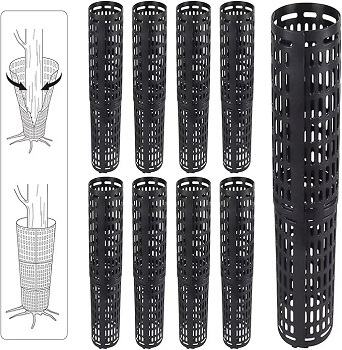
Protect trees, flowers, vegetables and seedlings from a variety of threats.
Highlights:
- Protects against animal gnawing, lawn equipment damage, and other threats.
- Can be expanded to accommodate trees of different diameters and heights.
- Allows air circulation and prevents moisture buildup.
- Connects vertically and horizontally for quick installation.
- Made of flexible plastic that is considered waterproof and weather resistant.
Use of Protective Caps
Special protective caps made of plastic or metal can be used to protect seedlings – a simple, effective and affordable way to protect your plants.
The caps should be large enough so that rabbits cannot reach the seedling. Be sure to secure the caps in the ground with stakes. My favorites are:
Garden Cloche, Sapbontchi 10 pieces
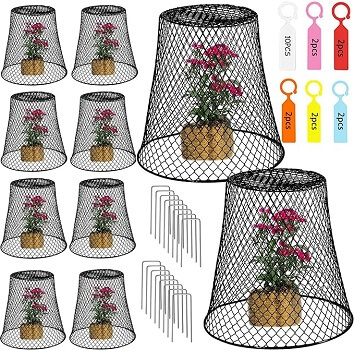
Sapbontchi garden cap, consists of 10 parts, 30 anchors, and 10 white and 10 colored labels. This plant cap is made of metal wire to protect plant seedlings, shrubs, flowers, and vegetables.
Key feature:
- The kit includes anchors and labels for added convenience.
- Indoors, it prevents potted plants from being damaged by pets, while outdoors it serves as a protective dome for plants or seedlings planted in your garden or vegetable garden. The structure also acts as a barrier to deter moles and voles from the roots.
- The garden cap has a wider diameter and greater height – 9.5 inches.
- Made of high-quality metal and coated with PVC, it has a smooth surface and sturdy construction. The materials are rust-resistant, ensuring durability and continuous use for several quarters.
- Sapbontchi offers all customers free returns and exchanges for 1 year.
Garden Cloches for Plants Set of 6
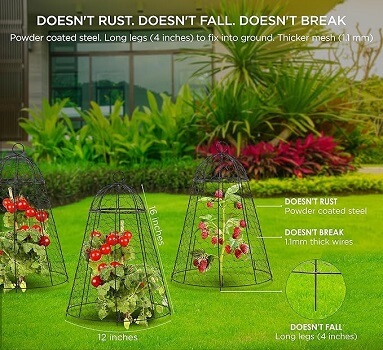
This set consists of 6 dome-shaped hubcaps. Each cap is 12 inches in diameter and 20 inches high, providing more room for larger plants.
Key Features:
- Thicker mesh (1.1mm) than some alternatives, potentially providing better resistance to wear and tear.
- Powder-coated steel construction to prevent rusting, unlike products with painted mesh.
- Four long legs (4 inches) provide stability in windy conditions and solve the common problem of clocks without legs.
- Fine mesh is designed to keep out squirrels, rabbits, birds, chickens, and other animals.
- Suitable for protecting various plants including seedlings, vegetables and small trees.
- Can be used in raised beds, gardens and greenhouses.
Gardener’s Supply Company Chicken Wire Crop Coop
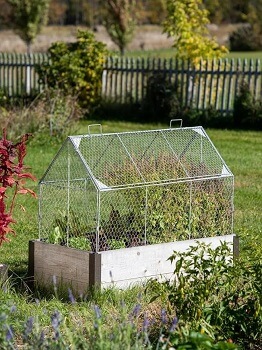
This is the largest protection that can be handy for an entire bed.
Key Features:
- Easy installation
- The opening roof provides easy access to planting, tending, and harvesting plants.
- Weighs only 9 pounds, making it easy to move and reposition.
- Durable and weather resistant.
- Large coverage-22 inches wide and 45 inches long, potentially suitable for multiple plants.
Expert Opinion: Caps are elegant hats for your plants, providing targeted protection without sacrificing aesthetic appeal. They are especially effective for protecting individual plants.
Hunting rabbits
If rabbits have already taken up residence in your garden and are causing serious damage, you can try to catch and release them elsewhere.
Live traps are most often used, which do not harm the animals. The trapped rabbit can be taken to another location and released. The trap should be set in a place where rabbits often walk. Use apples, carrots, and cabbage as bait.
One such option is:
LifeSupplyUSA Best Humane Animal Live Trap
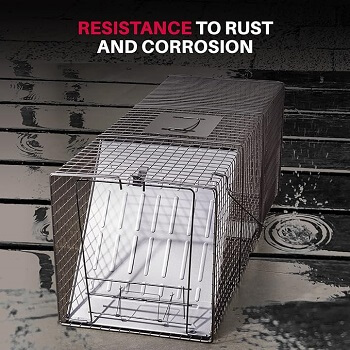
A live trap designed to catch and move small to medium-sized animals such as raccoons, opossums, cats, marmots, squirrels, and rabbits.
Highlights:
- Durable construction: features iron wire mesh with steel reinforcement and galvanized coating to protect against rust.
- Humane design: designed to catch animals without causing harm, has smooth inner edges and safety guards for user safety.
- Efficient: utilizes gravity door and strong lock to prevent escape.
- Easy to use: one-handed installation with simple bait and trigger mechanism.
- Versatile: catches animals of different sizes with humane intentions.
Important:
Familiarize yourself with local laws and regulations before using traps.
Care should be taken when handling traps.
Do not use poisons to poison rabbits as this can be dangerous to other animals and humans.
Trapped rabbits must be kept in proper conditions.
Preventive measures
In addition to building fences and using deterrents, it is also important to keep the garden clean. This will help make it less attractive to rabbits.
Regularly remove debris, branches, leaves, and other materials from the garden that can provide shelter for rabbits.
Do not leave compost piles in the garden overnight, as they may attract rabbits.
If you have a compost pile, make sure it is well covered. Rabbits can tear up the compost pile in search of food, which can cause it to spoil.
Conclusion
Controlling rabbits in the garden is not easy, but it is doable. You can consider a wide range of methods for yourself, from humane traps to chemical means. Use the information to choose the most effective method to protect your garden. Have a good harvest!