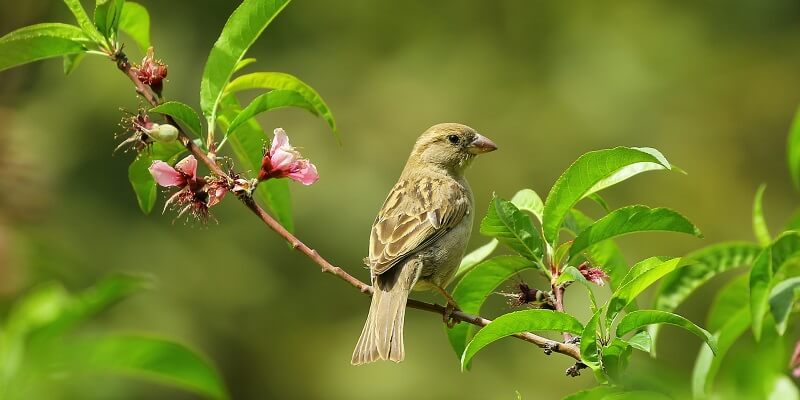
To keep birds out of the garden, a variety of repellent methods are used, including sound and visual repellents, reflective objects, physical barriers, birdhouses, nesting sites, and more.
By combining different strategies, you can create an environment that will encourage birds to find sustenance in less disturbed areas, allowing your garden to thrive.
Why You Should Keep Birds Out of the Garden
Birds are attracted to gardens for a variety of reasons, including the availability of food, water, and shelter. While having birds in your garden can help with pollination and insect control, too many of them can damage your plants and disrupt garden harmony. So, how do you find the balance between a garden that welcomes wildlife and one that remains intact? Let’s delve deeper into the solutions.
Natural Solutions to Deter Birds from Garden
To solve the bird problem in your garden while maintaining a harmonious and natural environment, consider the following humane and eco-friendly solutions.
Bird-repellent plants
Choose plants that are less attractive to birds, such as those with spiny leaves or unpalatable fruits.
According to my encounters, this encourages birds to look elsewhere for sustenance.
Mulching
Use mulch to cover open soil to make it harder for birds to access seeds and young plants.
Natural materials for mulch, such as straw or wood chips, can also improve the overall aesthetics of your garden.
Plant flowers that repel birds
Bird-repellent flowers are not only functional, but they are also beautiful. They give your garden vibrant colors and a delightful fragrance, enhancing its visual appeal.
These flowers naturally deter birds from landing and searching for food in your garden. Their scents, colors, and texture create an environment that birds find unattractive.
By deterring birds, these flowers often attract pollinators such as bees and butterflies, contributing to the health of your garden’s ecosystem.
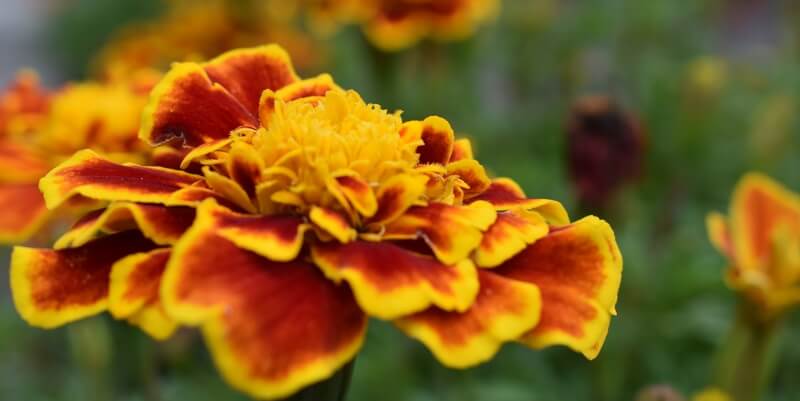
Bird-repellent flowers to look out for
Here are a few types of bird-repellent flowers that you can plant in your garden:
- Velvet (Tagetes spp.) – Velvet gives off a strong odor that birds find unattractive.
- Lion’s Zew (Antirrhinum spp.). Lion’s Zew produces brightly colored tubular flowers that can be difficult for birds to access. Their unique shape deters birds from feeding on them.
- Cosmos (Cosmos spp.) . Birds tend to avoid them because of their slightly pungent scent.
- Zinnias (Zinnia spp.) . Zinnias add vibrant color to your garden and are usually unappetizing to birds. Their brightly colored petals create a visually stimulating environment.
- Nasturtiums (Tropaeolum spp.). Nasturtiums are not only beautiful but also emit a pungent odor that birds dislike. Their unique foliage can deter bird visitors.
- Salvia (Salvia spp.) . Salvia plants have tubular flowers that make it difficult for birds to access nectar. They attract pollinators such as bees and butterflies and deter birds.
- Onions (Allium spp.). Onion flowers, including ornamental onions, have an oniony odor that birds usually avoid.
Natural predators
Encourage natural predators such as owls, hawks, or cats to visit your garden. The very presence of potential threats can scare away smaller birds.
By implementing these natural solutions, you can maintain the delicate balance of your garden’s ecosystem. Birds will be able to continue to visit your outdoor garden without posing a threat to your plants.
Reflective Items to Deter Birds from the Garden
Birds are highly visual creatures and are easily startled by sudden flashes of light or movement. Reflective items create a visual disturbance that makes birds uncomfortable and hesitant to land in your garden.
Reflective items can be used in a variety of garden settings including vegetable gardens, orchards, and flower beds. They are adaptable and can be moved around as needed to protect different areas of your garden.
Choose various reflective items such as old CDs, strips of aluminum foil, or reflective tape. These items are readily available and easy to work with.
Securely attach the reflective items to garden stakes, branches, or trellises near the plants you want to protect. Make sure they are clearly visible and can move in the wind to create flashes of light.
Here are some, in my opinion, noteworthy bird repellents available in the market.
Bird Deterrent Reflective Scare Tape
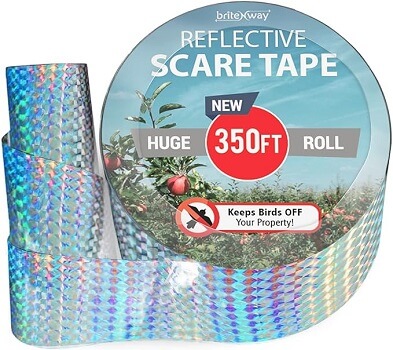
Birds, like most creatures, are inherently wary of unfamiliar and light-reflecting objects. Shiny tapes create visual confusion and discomfort for birds, making them reluctant to approach your garden.
Purchase reflective or metallic tapes, such as strips of Mylar or aluminum foil. These materials catch and reflect light, creating attractive visual effects.
Hausse 10 Pack Reflective Pinwheels with Stakes
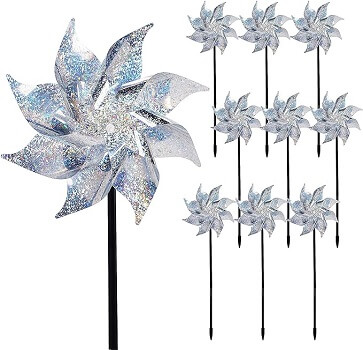
Utilizing the power of wind movement and light reflection, the decorative fidget spinners effectively deter birds from any angle. Each pack contains 10 shiny, reflective mylar spitters that spin easily in the wind to create a dazzling flash that will protect your garden, farm and lawn.
EACILLES Reflective Discs to Keep Birds Away
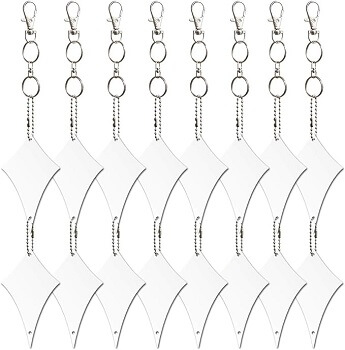
These mirrored disks are not just functional; they will be a stylish addition to your outdoor space. The disks move easily and create reflections of sunlight that will puzzle and scare away birds. Perfect for protecting your fruit trees and yard. They confuse the eye and gently draw birds away from your space.
Wind bells
Wind bells make soft and pleasant sounds as they sway in the wind. These sounds create a subtle and non-threatening disturbance that can deter birds from approaching your garden.
Wind bells add an aesthetic element to your garden, enhancing its visual charm while serving a functional purpose.
Choose bells that make soft, melodic sounds rather than loud or harsh sounds. Choose bells made of materials such as bamboo, wood or light metal to make them sound gentle.
Place the bells where they can catch the breeze so they make gentle sounds. Do not block their movement with dense vegetation or buildings.
Bird B Gone Reflect-A-Bird Wind Spinner
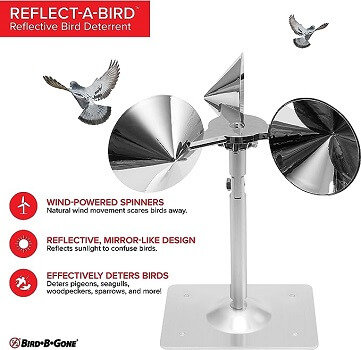
Setting up these reflective wind-driven bird deterrent trolleys is easy. Optimal results are achieved when placed in direct sunlight and in areas with a light breeze to effectively repel birds.
Made of durable aluminum and weather-resistant plastic, these wind spinners can withstand the weather. The chrome finish not only ensures durability but also serves as an ideal bird deflector.
These quirky devices, if strategically placed in your garden, can create movement and visual interest, deterring birds from eating your plants while adding a touch of whimsy to your outdoor space.
Garden spinners make playful and unpredictable movements when caught in a breeze. These movements create visual interest and unpredictability, which can deter birds from approaching your garden.
Physical Barriers to Keep Birds Away
One of the most effective approaches is the use of physical barriers. These tangible barriers, when strategically placed in your garden, create a protective shield that keeps birds from accessing your plants while maintaining the serene atmosphere of your outdoor space.
Physical barriers directly protect your plants from bird interference, preventing damage to them and keeping your garden productive.
Physical barriers are a humane and non-lethal method of deterring birds. They do not harm birds, ensuring that the wildlife in your garden remains unharmed.
There are several types of physical barriers that can be used in the garden to deter birds:
Bird Netting
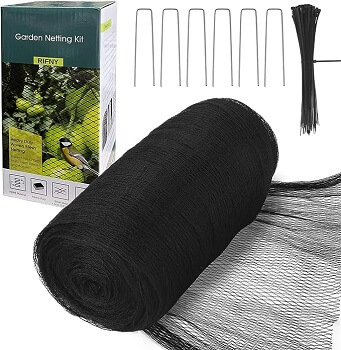
Bird netting is a fine-mesh material that is used to cover plants, creating a protective barrier that prevents birds from reaching crops. It is especially effective in protecting fruit trees and berry bushes.
- Cover vulnerable areas with bird netting, ensuring no gaps for birds to access.
- Make sure there are no gaps in the netting and cover vulnerable areas to protect your crops.
This netting is incredibly versatile and can be used to protect different types of plants, from vegetables and fruits to delicate flowers. It is especially useful for crops that attract birds, such as berries, tomatoes, or grapes.
Row Covers
Row covers are lightweight, transparent fabrics that are applied directly to rows of plants. They protect crops from birds and also provide some frost protection.
Using visual deterrents
Scare tactics effectively scare birds away from your garden by creating visual disturbances or threats. Here are some common scare tactics:
Traditional scarecrows
While it may seem simple and outdated, the traditional scarecrow remains an effective and reliable method of scaring birds away from the treats in your garden.
The idea is simple: birds see a scarecrow standing guard and believe it’s a real person. This perceived threat keeps them at a distance, reducing the risk of damage to your plants and seeds.
Additional details such as hats, gloves, and even boots can be added to make the scarecrow more realistic.
- Place the scarecrow where birds will easily see it and where it can cover the area you want to protect.
- Add movement, such as a piece of cloth or rope, to simulate the illusion of a living creature’s presence.
- Periodically move the scarecrow to different locations in the garden. Birds may become accustomed to its presence, making it less effective.
De-Bird Balloon Bird Repellent
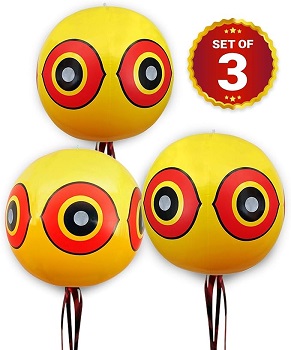
These balloons are shaped like eyes and move in the wind. The false eyes create a visual deception, making birds think they are being watched, which deters them from approaching your garden.
Fake Predators to Keep Birds Out of Your Garden
Fake predators will be a generally effective method of keeping birds from invading your garden.
KKY 2 Packs Fake Plastic Owl Bird
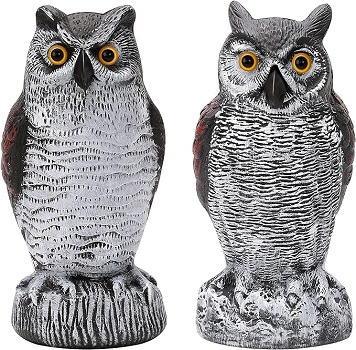
Owls are natural predators for many species of birds. Placing artificial owl decoys in your garden creates a visual illusion, leading other birds to believe a real raptor is present. This visual deception can discourage them from landing.
To maximize the effectiveness of artificial owls, periodically move them to different locations in your garden. Birds can become accustomed to their presence if they stay in one place for too long.
Flyonte Birds Scaring Hawk Flying Kite with Pole
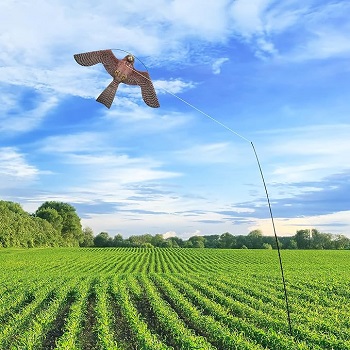
Equipped with a 4m telescopic boom, this aerial hawk soars and dives gracefully over gardens, vegetable gardens, allotments, and lawns, effectively repelling birds. With a 1.2m wingspan adorned with realistic coloring, it provides a realistic presence in the sky. The complete kit includes a lightweight and sturdy 4m telescopic fiberglass pole that needs only a light breeze to convincingly fly over gardens and land.
Rubber Snakes
One innovative solution is the use of rubber snakes. These realistic-looking reptile-shaped lures can create the illusion of a threat, deterring birds from visiting your garden. By placing realistic rubber snakes in your garden, you create a visual deception that creates instinctive fear in birds and keeps them at a distance.
Invest in high-quality rubber snakes that look very similar to their live counterparts. The more authentic they look, the more effective they will deter birds.
Creating a separate attractive area for birds
Feeders: distracting birds from your crops
Although it may seem counterintuitive, providing birds with dedicated feeding areas can actually help deter them from your garden.
By offering an alternative food source, you can divert their attention away from your crops and keep your garden productive.
- Distraction: feeding stations distract birds and provide them with an easily accessible food source, reducing their interest in your garden.
- Customizable: you can choose the type of bird feeder and type of bird food to attract certain species of birds and keep them occupied.
Install bird feeders or birdhouses elsewhere on your property to divert birds away from your garden. Make sure they contain seeds, nuts or fruit.
Birdhouses and nesting sites: coexistence with bird inhabitants
Birdhouses and designated nesting sites provide safe and suitable places to build nests and raise chicks. According to my encounters, by offering these nesting options, you can encourage birds to use them as alternative nesting sites, diverting their attention away from your garden’s plants and crops.
When birds have suitable nesting sites, they are less likely to disturb your garden.
Solar Repellents to Keep Birds Out of Garden
Repellents are substances or products that can deter birds from approaching and damaging your crops. They offer a harmless and effective way to protect your garden by allowing birds to stick around.
PGFIT 2-Pack Solar Repeller Ultrasonic
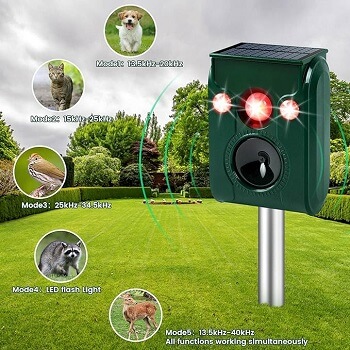
This ultrasonic repeller uses ultrasonic waves and powerful LED strobe lights with siren sounds to disperse various birds, animals, and pests. It effectively targets birds, cats, dogs, rabbits, birds, bats, boars, deer, mice, squirrels, raccoons and many others.
- The device activates when it detects moving objects, triggering ultrasonic waves, LED strobes, and beeps to scare away. It then returns to sleep mode under normal conditions.
- With the 5-level function setting, users can customize the frequency to effectively repel various birds and animals. Higher frequencies are recommended for increased effectiveness.
- The unit is designed to be easy to install, it can be pointed at the desired area, inserted into the ground or hung on objects such as trees, fences, and walls.
- This repeller is harmless to both humans and the environment and complies with environmental regulations.
Repellents do not harm birds; they create conditions that discourage them from landing or searching for food in your garden. They can be applied specifically to plants or areas that are most vulnerable to bird damage.
Repellents also serve as a temporary deterrent, making them ideal for protecting certain crops at their most vulnerable stages of development.
In addition to deterring birds, ultrasonic repellents offer a versatile solution for managing a variety of unwelcome visitors, including neighborhood cats, chipmunks, dogs, deer, rabbits, squirrels, and many others.
Sound repellents create sounds that disturb or annoy birds, make them uncomfortable, and scare them away from your garden. These repellents are effective for a range of bird species and are an excellent choice for keeping your garden productive.
Helpful video
Conclusion
In an effort to protect your garden from bird invasions, it is important to find humane and eco-friendly solutions that will protect your plants without harming visiting birds. By utilizing strategies such as birdhouses, nesting sites, repellents, and sound and visual deterrents, you can maintain a garden that combines productivity and tranquility.
In conclusion, keeping birds away from the seeds of your garden requires a combination of strategies that provide a natural and humane deterrent. Applying these techniques lets you enjoy a bountiful harvest without worrying about birds dainting your seeds.