As an experienced gardener, I cannot help but touch on the subject of snakes in our garden. Many of my colleagues and neighbors often complain about the presence of these reptiles, perceiving them as a serious threat.
The reasons why snakes may end up in our gardens are quite prosaic. They are often attracted to areas that are well-warmed by the sun, the presence of shelters in the form of bushes, woodpiles, or rodent burrows, and an abundance of potential prey – small rodents, birds, and insects.
It makes sense that a garden plot with such an abundance of resources becomes an attractive habitat for snakes. And if you have already discovered a snake in your plot, you should not panic.
What Attracts Garden Snakes?
| Factor | Description |
| Hiding places | Snakes like to hide in piles of rocks, logs, trash, compost heaps, and thick grass. |
| Water | Snakes are attracted to water sources such as ponds, streams, birdbaths, and even water droplets from a hose. |
| Food | Snakes prey on small animals such as rodents, frogs, birds, and insects. |
| Temperature | Snakes like warmth and often bask in the sun. |
| Lack of predators | Snakes avoid areas where their natural enemies such as owls, hawks, and dogs live. |
Nevertheless, I understand the concerns of gardeners, especially when it comes to venomous species. However, based on my many years of experience, I can confidently state that the vast majority of snakes are not at all aggressive towards humans and attack only in self-defense. Moreover, their presence in the garden can even be beneficial, as they regulate the population of rodents and insect pests.
Yes, these slippery creatures are not always welcome guests on our plots, but you should not immediately grab a shovel or pitchfork.
In this article, I want to share my experience of fighting snakes in the garden, as well as tell about humane and safe methods of their removal.
Snake Species Identification
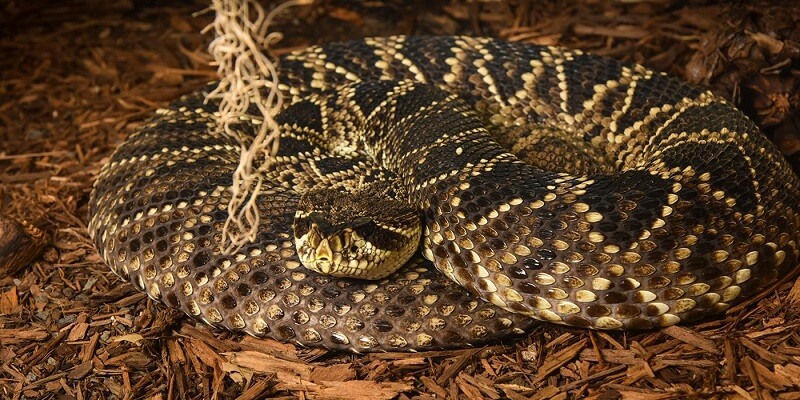
One of the keys to staying safe when encountering snakes on your property is knowing how to distinguish venomous species from non-venomous species. From my years of experience, several venomous snakes in the United States require careful handling.
Some of the most common venomous species include rattlesnakes, rattlesnake vipers, coral rapids, and pit vipers. They are easily identified by their triangular-shaped head, vertical pupils, and distinctive diamond, stripe, or ring patterns on the body. Also, venomous snakes often demonstrate aggressive behavior, make a warning sound by rubbing the rings of the tail, and can adopt a characteristic threatening posture.
At the same time, it is not uncommon to find harmless species of snakes in our gardens, such as hornets, slithers, and rainbow snakes. They tend to have a small oval head, rounded pupils, smooth scales, and a calm, non-aggressive disposition. Many of them even help gardeners by feeding on rodents and insects.
However, I would not recommend approaching any unidentified snake to avoid trouble. Instead, try to examine it closely from a safe distance, paying attention to its head shape, pattern, size, and behavior. At the slightest sign of a possible threat, move away immediately and get professionals involved.
The Most Common Snake Species
There are more than 300 species of snakes in the United States. Of these, only about 20 species are venomous.
The most common snake species are:
Poison
| Name | Distribution | Feeding | How the bite works | Description |
| Rattlesnake | Throughout the U.S., especially in the Southwest | Small mammals, birds | Neurotoxic poison causes paralysis, shortness of breath, and bleeding. | Sturdy body, triangular head, rattlesnake tail. |
| Copperhead | Southeastern United States | Small mammals, birds | Hemotoxic poison, causes tissue destruction, bleeding | Flat body, copperhead, dark transverse stripes |
| Water Moccasin | Southeastern United States | Small mammals, birds, fish. | Hemotoxic poison causes tissue destruction, and bleeding. | Stout body, flat head, dark spots |
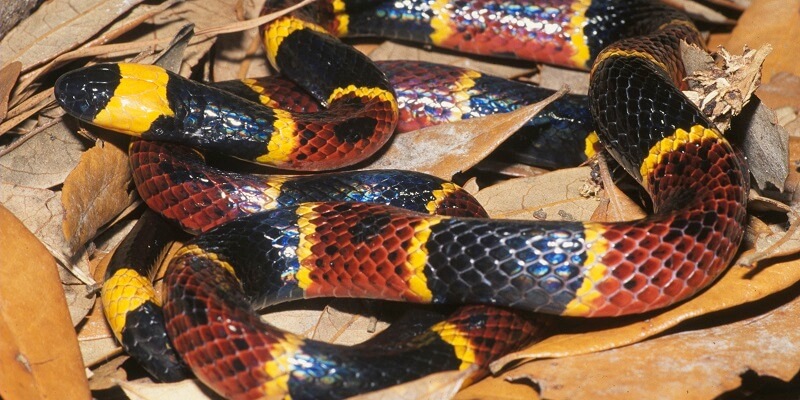
| Coral Snake | Southeastern U.S. | Small lizards, snakes. | Neurotoxic poison causes paralysis, shortness of breath | Red, black, and yellow rings |
Non-poisonous
| Name | Distribution | Feeding | Description |
| Kingsnake | Throughout the U.S. | Small mammals, birds | Long, stout body, various color variations, Black and white stripes |
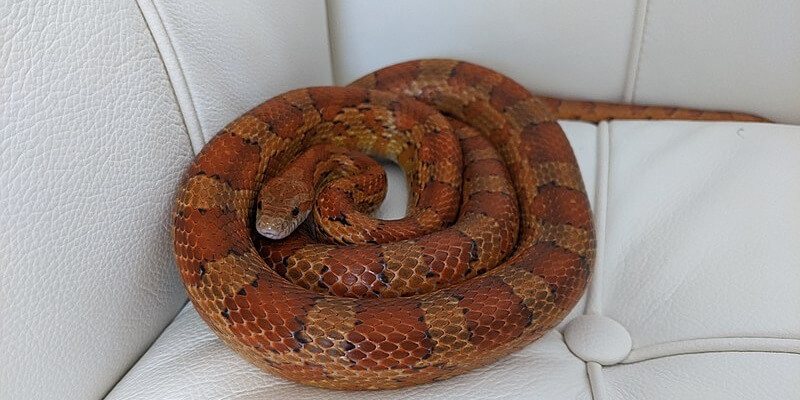
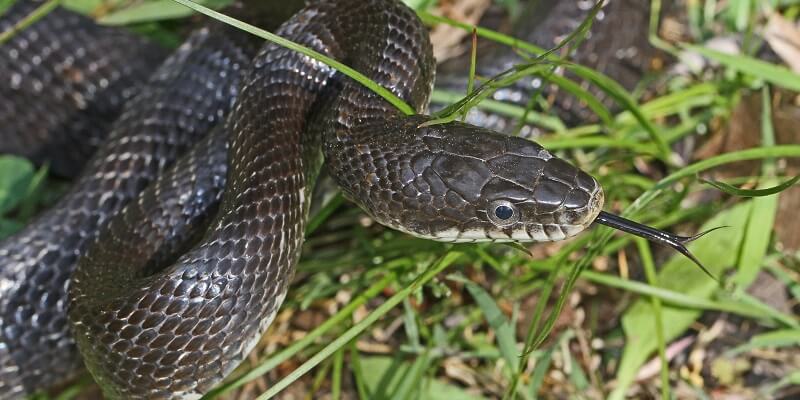
| Rat Snake | Throughout the United States | Small mammals, and birds, mainly feed on rodents, birds, and eggs. | Rat snakes come in a variety of colors and patterns, including black, brown, and gray, with some species displaying intricate patterns that mimic venomous snakes for protection. |
| Garter Snake | Throughout the U.S. | Small frogs, fish, earthworms. | Long, slender body. They are non-venomous and usually have longitudinal stripes running along the body. |
| Water Snake | Throughout the U.S. | Fish, frogs | Long, thick body, brown or olive coloration |
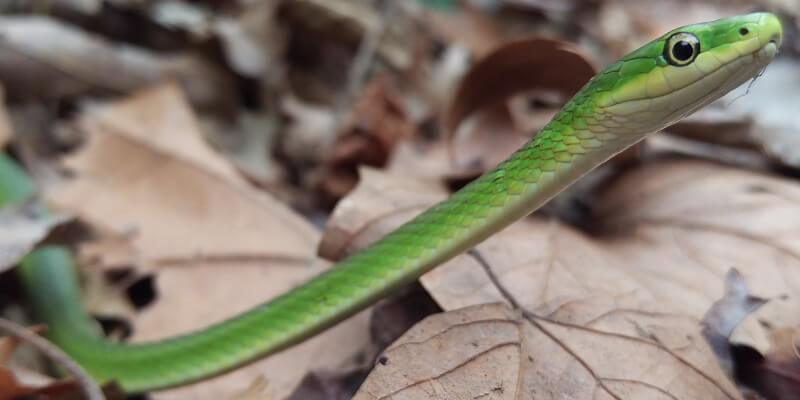
| Smooth Green Snake | Eastern United States | Insects, lizards | Bright green body |
| Milk Snake | Throughout the U.S. | Small mammals, birds | Red, black, and yellow rings |
| Indigo Snake | Southeastern United States | Small mammals, birds | Black body |
How to Get Rid of Garden Snakes: Primary Measures
Based on my years of experience, I have found that one of the most effective ways to control the snake population in a garden plot is to eliminate the factors that attract them there.
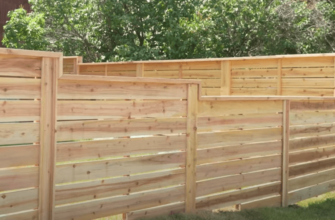
Firstly, all potential snake refuges and breeding sites should be removed. These include thickets of tall grass and shrubs, disorderly piles of brushwood or construction debris, as well as firewood stacks, boulders, and rodent burrows. Snakes love such secluded and sun-warmed places for hatching and resting. By removing or destroying these hiding places, you will deprive reptiles of the desire to settle on your territory.
Restricting access to rodents, which are a major food source for snakes, is also important. Regularly clear your garden of debris, close garbage cans tightly, eliminate burrows and don’t leave food scraps that can attract rats and mice. This will help reduce snake foraging and reduce their interest in your site.
Finally, I would recommend installing certain barriers to prevent snakes from crawling in. This can be a low fence with fine mesh or smooth vertical walls, deepened into the soil by about 30-40 cm. Snakes are reluctant to overcome such obstacles. Curbs made of smooth stones or flat concrete sidewalks without gaps can also be effective.
Of course, preventive measures are not a panacea, but their competent application will significantly reduce the attractiveness of your site for snakes.
Eliminating attractive areas:
- Clean up grass clippings, leaves, and debris regularly.
- Seal burrows and gaps in foundations, walls, and fences.
- Eliminate water sources (stagnant puddles, bird drinkers).
- Fence compost piles and garbage cans.
What Deter Garden Snakes?
Even after all preventive measures have been taken, some particularly stubborn snakes can still enter your territory. In such cases, repellents are a great addition to the fight for your garden.
From personal experience, I can recommend several safe and effective repellents.
One of the easiest and most readily available is the use of odor-based repellents. Snakes have an excellent sense of smell and are quite sensitive to pungent scents. Spraying drinks such as vinegar, beer, or coffee along plot boundaries or in potential refuges is sufficient. Their pungent odor will deter reptiles. Chili, peppermint, and lavender essential oils are also good.
Equally effective are means that affect the hearing and vibratory sense of snakes. Sharp sounds from clappers, bells or just tapping with a stick can scare them away. Vibrating signals from special ultrasonic devices cause discomfort and make the creepers stay away.
Of natural repellents, I would single out garlic, pepper, and soap solutions. Crushed garlic with its pungent aroma perfectly repels snakes, if you scatter it in places of their possible penetration. Equally effective and burning red or black pepper in the form of dry powder. Finally, soapy water will reliably repel snakes because of its slippery texture and unpleasant odor.
When selecting repellents, it is important to consider safety for the environment, children, and pets. Favor natural and harmless options. And remember that a combination of several methods is always more effective in the long run than one universal repellent. This is the only way to maximize your garden’s protection from unwanted reptiles.
Ortho Snake B Gon1 – Snake Repellent Granules
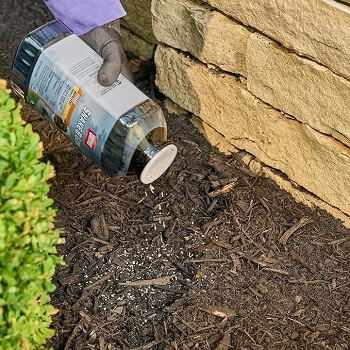
Ortho Snake B Gon1 Snake Repellent Granules are designed to prevent snakes from entering, nesting, and feeding in and around your home. These granules are applied in areas where snake activity has been noticed such as garages, barns, sheds, barns, woodpiles, and patios.
- The pellets are applied as needed, usually every 30 days, for ongoing protection.
- Odorless, ensuring no unpleasant odors during application or use.
- Safe for people, pets, and plants when used as directed. However, it is not recommended for use on or near plants intended for food.
- Each 2-pound bottle of Ortho Snake B Gon1 can cover up to 1,440 square feet, which provides adequate coverage for most residences.
- Repeated applications may be required for long-term control, depending on the extent of the snake infestation.
Snake Defense Spray
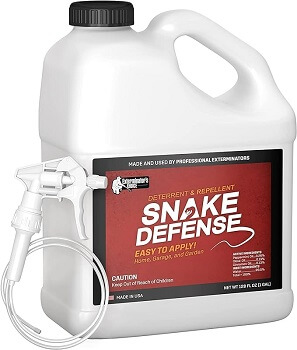
Exterminators Choice snake repellent spray is a powerful product designed to deter venomous and non-venomous snakes from your home and property.
- Suitable for use both indoors and outdoors and is effective against common snake species such as garter snakes, rattlesnakes, copperheads, and others.
- It can be applied around doorways, windows, gardens, tool sheds, storage areas, patios, and lawns to prevent pests from entering living spaces.
- Its non-toxic formula includes natural ingredients such as clove, cinnamon, and peppermint oil, keeping pets and children safe while effectively repelling snakes.
- Ease of use is a key feature of this product as it comes with a convenient sprayer for easy application. Simply shake the bottle well and apply a few sprays to the desired area, preferably dry, for optimal results.
- The repellent can last from 2 to 3 weeks, depending on weather conditions.
- Available in a large 1-gallon (128-ounce) container, providing ample supply to cover the area and provide long-term protection.
- The handle makes it easy to store and carry for future use, providing convenience.
Recommendations:
- Use with caution.
- Observe the safety precautions indicated on the package.
- Do not use near water bodies, vegetable gardens, or places where children and pets congregate.
Ultrasonic Repellents
Ultrasonic garden snake repellers are devices that emit high-frequency sound waves that are designed to deter snakes from entering and living in garden areas.
These repellers work by emitting vibrations that affect the senses of snakes, causing discomfort and preventing them from sticking around.
Some claim that they are successful in reducing snake activity, while others report little impact. Factors such as the species of snakes, environmental conditions, and garden layout can affect the effectiveness of ultrasonic repellents.
Important: remember that the use of repellents does not always guarantee the complete elimination of snakes.

Snake Traps
While the preferred option is always to repel snakes by harmless means, sometimes the situation may require their physical capture and relocation. But this should be done extremely carefully and humanely, avoiding harm to both the reptiles and yourself.
To safely capture snakes, there are special devices such as traps, hand grips, and strong mesh covers. Applying them, you will be able to immobilize the snake at a sufficient distance without endangering yourself. Remember, however, that only experienced professionals should work with venomous species.
Super Glue Traps 8 Pack for Mice & Snakes
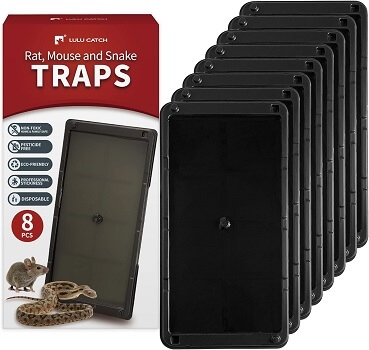
LULUCATCH Super Glue Traps 8 Pack for Mice & Snakes are carefully designed with larger, stronger trays to effectively trap large rodents and snakes.
- These traps utilize non-toxic super glue that is cold weather resistant. Once caught in the trap, the snake will not be able to free itself and the glue is completely safe for both children and pets.
- The installation of these traps is nothing complicated. The user just needs to remove the packaging, unwrap the trap, and place it at strategic locations.
- The traps come with a peanut butter scent, eliminating the need for additional bait. In addition, disposal of the traps is convenient and hygienic as there is no need to physically touch the trapped snake.
- For optimal results, it is recommended that sticky traps be placed along the active travel paths of snakes and rodents.
- These 5″ x 10″ traps are versatile and can be placed in a variety of locations including basements, apartment buildings, warehouses, restaurants, homes, enclosed spaces, industrial buildings, and attics.
- They effectively trap a wide range of pests including mice, rats, snakes, lizards, crickets, scorpions, and spiders.
Once a snake is caught in a glue trap, remove it in a sturdy container with ventilation holes away from your yard and pour some vegetable oil or spray the snake with PAM cooking oil and the snake will release. This will keep the reptile alive and restore the natural balance to its new habitat.
Whichever method you choose, remember the importance of caution and competence when dealing with snakes. You should not take risks if you do not have enough knowledge and experience. In such cases, it is better to contact professionals who can solve the problem legally and humanely.
Important:
- Before taking the snake to a safe place, make sure that it is not poisonous.
- Use protective gloves when transporting the snake.
- Do not release the snake near bodies of water where people may be.
Call a Professional Herpetologist
This is the safest and most reliable method that I recommend to everyone.
Serpentologists are people who know everything about snakes. They know how to catch them safely without harming themselves or animals.
Safety Precautions When Working in the Garden
When snakes are present in the garden, certain precautions must be taken to ensure safety. From personal experience, I can recommend the following:
- Wearing protective clothing and footwear -Always wear tight clothing with long sleeves and pants, and boots or high boots when working in the garden. This will protect you from accidental snake bites that may lurk in the grass or under foliage. Avoid open-toed shoes and shorts.
- Caution when working in dense vegetation – Snakes often hide in dense thickets, under rocks, dead wood, or boards. Use extreme caution when working in these areas. I recommend removing debris and trimming dense bushes in advance to keep yourself safe. Do not stick your hands randomly into unsightly places.

What to Do in the Event of a Snake Bite
Despite precautions, the risk of a snake bite cannot be completely ruled out. If this occurs, remain calm and seek medical attention immediately.
Try to memorize or photograph the snake to facilitate identification of the venom. Record the time of the bite.
Snake Bite First Aid:
Although most snakes in the United States are not venomous, it is important to know how to proceed if you do get bitten by a venomous snake.
Symptoms of poisoning:
- Pain at the site of the bite: may be burning, or throbbing.
- Swelling: may extend to the entire limb.
- Redness: may be pink to dark red.
- Nausea and vomiting: may be caused by poison.
- Dizziness and weakness: may be caused by a drop in blood pressure.
- Shortness of breath: may be caused by swelling of the throat.
First aid rules:
- Move away from the snake: do not try to catch or kill it.
- Calm down: panic will only make the situation worse.
- Remove all jewelry and tight clothing from the bite site: swelling may increase.
- Wash the wound with soap and water: do not use antiseptics.
- Apply a cold compress to the bite: this will help reduce swelling.
- Fix the bitten limb: it should be below the level of the heart.
- Do not give the victim to drink or eat: this can accelerate the spread of poison.
- Seek medical attention as soon as possible: even if the symptoms of poisoning do not appear.
Conclusion
I’ve long been used to the fact that snakes are part of our ecosystem. And while most of them are not dangerous to humans, their presence in the garden can be unwelcome.
Remember that snakes are part of the ecosystem and play an important role in controlling rodent populations.
Use humane methods to address the snake problem in the garden.
Do not kill snakes unless it is an absolute necessity.
Contact a professional if you can’t handle the problem on your own.
I hope my article helps you solve your garden snake problem humanely and safely. Be careful and take care of yourself!
How to Keep Garden Snakes Away – Video Guide
Links to additional resources:
U.S. venomous snake information
Snake Bite First Aid