To get rid of ants in the garden, you can use home remedies, organic matter, traps or baits. There are many ways to control ants and the choice of method depends on several factors including the extent of the infestation, where the ants live and the gardener’s preference.
I’ve been gardening for many years myself and in that time I’ve gained a lot of experience with ant control. In this article, I will share my knowledge with you and tell you how to eliminate ants in the garden. All the methods presented are working, and you can choose the right option for you.
Why You Should Get Rid of Ants
These little insects may seem harmless, but if left unchecked, they can wreak havoc on your plants by nibbling on leaves, buds or even roots. They protect aphids from predators and in return, they enjoy the sweet dew that these pests produce. Aphids suck the life out of your plants and ants act as their bodyguards.
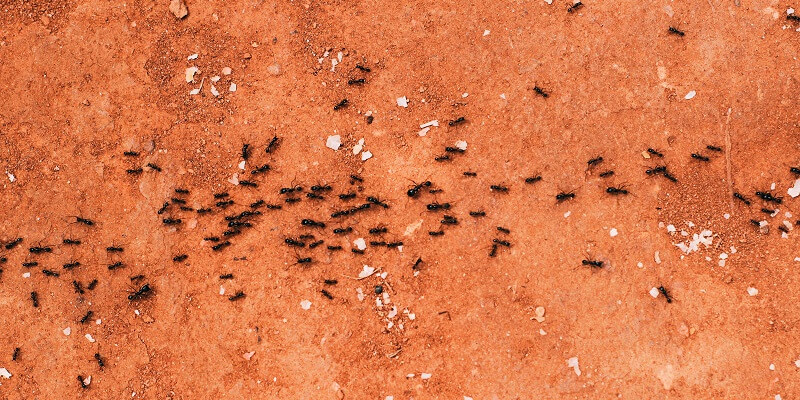
You may encounter different types of ants in the garden, including black ants, red fire ants, yellow ants, and pharaoh ants. These ants often reside in your vegetables: zucchini, corn, tomato, and peppers, settle in a flower bed, or raised bed, or may even breed in compost.
- Black ants are one of the most common ant species found in the garden. They don’t usually harm plants but can be a nuisance in large numbers.
- Redwood ants can be beneficial because they help loosen soil and kill pests. However, they can also be pests as they can damage plant roots.
- Watch out for Carpenter Ants-they can damage wooden structures and create nests in your garden furniture.
- Red Fire Ants-known for their painful bites, these aggressive ants can quickly take over your garden if not dealt with in time.
- Small and pale Pharaoh ants often nest indoors, but may venture into your garden for food.
Some ants prefer underground, creating elaborate tunnels, while others may build nests in rotting wood or even in cozy corners of your garden shed.
In this guide, I’ll share my experience and practical tips on how to keep ants out of the garden.
Natural Substances to Repel Ants in Garden
In my ant control efforts, I have found that Mother Nature supplies us with some great ant-repellent substances. They’re safe for our plants and the environment.
Citrus peels: Ants hate the smell of citrus. Scatter orange or lemon peels around your garden or mix them with mulch to create a natural barrier. Not only does it deter ants, but it also adds a refreshing scent to your green haven.
Cinnamon: Sprinkle cinnamon on ant locations, edges of mulch beds, and plant stems. Cinnamon disrupts the odors that ants use to orient themselves. It creates a barrier that ants don’t want to cross. Reapply after rain or watering for long-lasting protection.
Cayenne pepper: Cayenne pepper has a burning flavor that repels ants. Dilute cayenne pepper with water in a ratio of 1:10 and spray the resulting solution on ants and ant hills. You can also add cayenne pepper to the solution with vinegar to enhance the effect.
Coffee grounds: Don’t throw away coffee grounds! Spread them all over the garden. Ants don’t like the smell, and coffee grounds also act as a natural fertilizer for your plants. Sprinkle your compost with used coffee grounds to deter ants and enrich the compost with nitrogen.
Spray with essential oils: Ants don’t like certain essential oils such as peppermint, tea tree, and citrus. Mix a few drops of essential oil with water and spray on ant-prone areas. Use essential oils: Essential oils have a strong odor that repels ants.
Vinegar for Ants in Garden
Vinegar is a natural remedy that can be used to control ants in the garden. It has a strong odor that repels ants. The acidity of vinegar destroys the traces of ants and acts as a natural deterrent. It can also kill ants by direct contact without resorting to the use of harmful chemicals.
Here are a few ways to use vinegar to kill ants in the garden:
- Spraying vinegar: Dilute vinegar with water in a 1:1 ratio. Spray the resulting solution on ant trails and ant hills.
- Pouring vinegar into anthills: Pour pure vinegar into the anthills. This will help kill ants and their eggs.
- Vinegar baits: Mix vinegar with sugar or honey. Spread this bait in areas where you see ants. Ants will be attracted to the bait, but the vinegar will kill them.
Use white vinegar. White vinegar has a stronger odor than other types of vinegar.
Spray vinegar in the evening or early morning. Ants are less active at this time, and they are less likely to avoid vinegar.
Repeat the vinegar treatment every few days. This will help kill all ants, including those that hatch from eggs.
Wear protective gloves and goggles when handling vinegar.
Do not spray vinegar on plants. Vinegar can damage plants. Do not pour vinegar into ant hills if they are near trees or other plants. Vinegar can damage plant roots.
Dishwashing Detergent
Soap breaks down the ants’ exoskeleton, leading to dehydration and possible death.
Water helps to distribute the soap evenly and facilitates its penetration into the ant colony. Use also as a solution with vinegar.
- In a sprayer, mix equal parts water and dishwashing detergent.
- Repeat treatment every few days for permanent ant control, especially after rain or watering, as the solution may wash off.

Boiling Water
How it works: dousing ant nests with boiling water can be an effective, albeit somewhat aggressive method. It destroys the ant colony and damages the structure.
Use: Find ant nests, remove the top and pour boiling water. Be careful not to damage the plants.
Destroying Ant Hills
The most effective, but also the most labor-intensive, method. The anthill and the eggs and larvae should be dug out and destroyed. You can use a shovel, hoe, or even a garden drill.
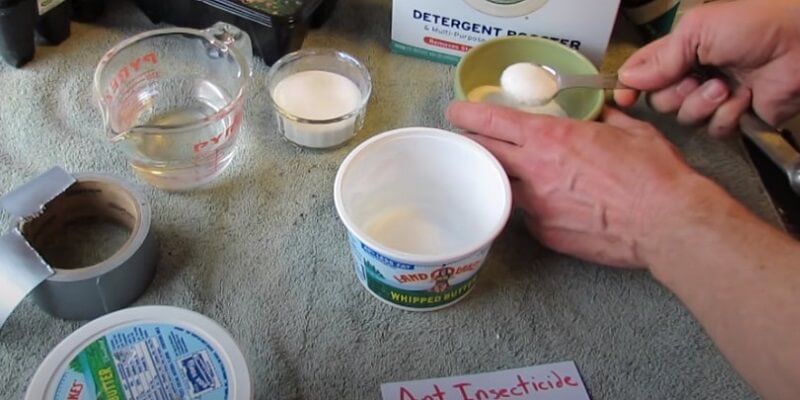
Ant Traps Outdoor
Ant traps attract ants by baiting them with a substance that is harmful to ants.
For ant traps to be effective, they should be placed in areas where you see ants. Traps should be checked regularly and replaced when they become filled with ants. Several types of traps can be used in combination.
Drill
While sugar lures ants, borax acts as a death trap. Place these baits near ant trails, but keep them out of reach of pets and children.
How to make:
- Mix equal parts borax and sugar in a shallow bowl.
- Add enough water to the borax and sugar mixture to make a thick paste. Stir the mixture until the borax and sugar dissolve in the water.
- Get a container with a lid. This can be a small plastic container or an old jar with a tightly closing lid.
- Soak cotton balls, sponges, or wafers in the solution of borax and sugar. Make sure they are well-soaked but not dripping.
- Place the soaked cotton balls or sponges in the container and close the lid. Make several holes in the lid so ants can access the trap but not other insects.
- Place ant traps in areas where you have noticed ant activity. These could be ant trails, entry points, or places where they congregate.
- Check the ant traps regularly. Fill them with a solution of borax and sugar as needed, especially after rain or watering.
Place traps in areas out of reach of pets and children. Borax is generally safe in small amounts, but should be handled with care.
The key is patience: ant traps may take some time to yield results. Be patient and allow the ants to carry the bait back to their colony.
Why it works:
- Attractive bait: The sweetness of the sugar attracts ants to the trap.
- Slow-acting poison: The borax acts as a slow-acting poison. The ants return the bait to the colony, disrupting the digestive system.
Using this homemade ant killer outdoors, you can target ant colonies at their source and effectively reduce their population in your garden. Monitor and replenish the traps regularly for constant control.
Boric Acid
Boric acid is a safe and effective ant-control agent. It works slowly, so ants eat the bait and carry it to their anthill, where it infects other ants.
Here is a recipe for a homemade remedy to kill ants outdoors:
- 1/2 cup boric acid
- 1/2 cup sugar
- 1/4 cup water
Mix the boric acid, sugar and water in a bowl. Spread the bait in areas where you see ants. Repeat the procedure every few days until the ants are gone. Ants will be attracted to the bait, but the boric acid will kill them. Change the bait every few days to keep it from fermenting.
Gloves and safety glasses should be worn when using boric acid.
Baking Soda and Powdered Sugar
Create a deadly bait by mixing baking soda with powdered sugar.
The sugar lures them in and the baking soda disrupts their digestive system. Similar to the borax and sugar bait, place these traps around ant hot spots.
Organic Methods of Ant Control
In my ant control efforts, I’ve realized that organic food not only protects our plants but also the delicate balance of our garden ecosystem.
Here are a few proven methods for controlling ants naturally:
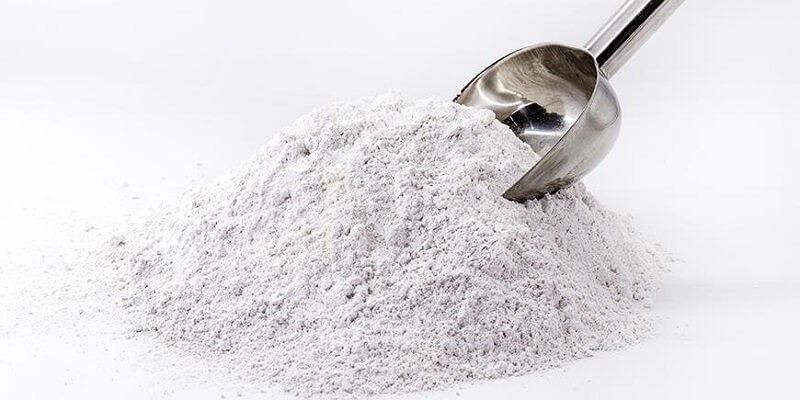
Kieselguhr: Is a powdery substance composed of fossilized diatoms. It dehydrates and damages the ants’ exoskeleton, leading to their death. Spread it around the base of plants, mulch beds, ant nests, or areas of high ant activity, paying special attention to ant trails and entry points. Harmless to us and our plants, it’s a powerful ally in our arsenal. Reapply after rain or watering.
Organic neem oil: A classic remedy in organic pest control. Neem oil is a powerful ant repellent. It disrupts the life cycle of pests, including ants and aphids. Mix it with water and spray it on ant-prone areas. My advice: apply in the evening to avoid harming beneficial insects.
Useful Nematodes: These microscopic warriors are our secret allies. Useful nematodes prey on ant larvae and pupae, helping to control their population. You won’t even see them working, but they work wonders underground.
Cornmeal: Surprisingly, ants do not digest cornmeal. Scatter it near ant trails or nests and watch them carry it back to their colony. Once consumed, it swells up inside them, ending their mischief.
Best Outdoor Ant Killer
I also suggest you consider the most effective professional remedies to help eliminate these uninvited guests for good. Here are my favorites:
Sevin Outdoor Ant Killer Concentrate 2-pack 32 FL. OZ
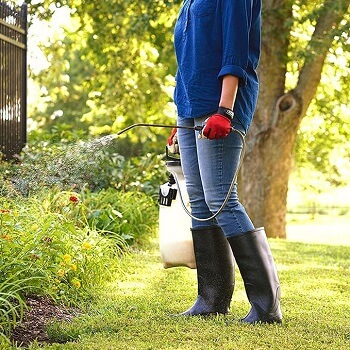
Sevin Insect Killer Concentrate is designed for practical pest control, this product kills more than 500 listed pests on contact and protects for up to three months. Its versatile application makes it suitable for use in various environments including home fruit and vegetable gardens, flower beds, lawns, raised beds, and around the home’s perimeter.
The concentrate protects more than 250 fruits and vegetables, offering a complete solution for garden pest control. Its non-staining formula is particularly suitable for use in rose gardens and house perimeter treatments, ensuring that surfaces remain intact during and after application.
TERRO Shaker Bag
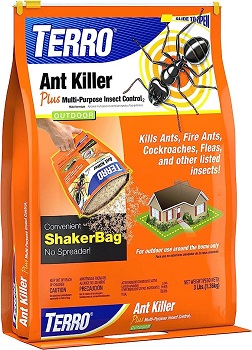
The TERRO Ant Killer Plus Multi-Purpose is a specialized insect control product designed to effectively eliminate a range of pests without unnecessary enthusiasm. With a focus on clarity and manufacturer-specified features, this product offers a targeted solution for those dealing with ants, fire ants, roaches, fleas, crickets, earwigs, millipedes, mites, palmetto bugs, silverfish, sow bugs, and more.
The powerful granules act swiftly, providing a fast-acting solution by killing listed insect pests within 24 hours of contact. Additionally, the product offers residual repellency, helping to keep insects at bay even after initial application.
Designed for outdoor use only, the granules can be used as a band treatment around house foundations and lawns or as a spot treatment on ant hills. The resealable shaker bag design ensures easy and convenient application, eliminating the need for a chemical spreader or broadcaster.
Spectracide Fire Ant Shield Yard Protection
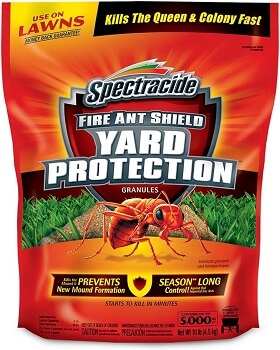
The Spectracide Fire Ant Shield Yard Protection Granules are formulated to address fire ant infestations and provide clear, concise benefits for users.
Designed for use outside on lawns and around house foundations, these granules eliminate existing ant mounds and prevent the formation of new mounds. The product works quickly by targeting and killing the fire ant queen and colony within minutes of application.
The granules offer season-long control for up to three months of protection against red imported fire ants. In addition to fire ants, the product also targets a range of other listed insects, including crickets, chinch bugs, armyworms, billbugs, cutworms, earwigs, fleas, roaches, grubs, sod webworms, ticks, and more.
Bonide Ant Killer Granules
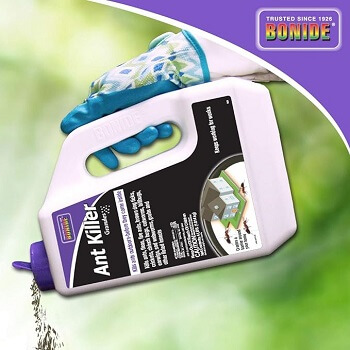
The Bonide 623 O7131956 Ant Killer Granules, designed for outdoor residential use only, these granules efficiently target and eliminate a range of pests, including ants, fleas, fire ants, brown dog ticks, crickets, chinch bugs, cutworms, billbugs, earwigs, sod webworms, and grubs.
This ready-to-use product is intended for direct application to lawns or garden areas, forming a protective barrier around the home.
The granules offer flexibility in application methods, allowing users to employ them as an overall lawn treatment, a band treatment around the house foundation, or as a spot treatment. Providing long-lasting insect control, the treatment can remain effective for up to 4 weeks.
Conveniently arriving in a ready-to-use state, the product is straightforward to apply following the provided rate chart. Thorough coverage is emphasized, and users are advised to water in the granules as indicated for optimal effectiveness.
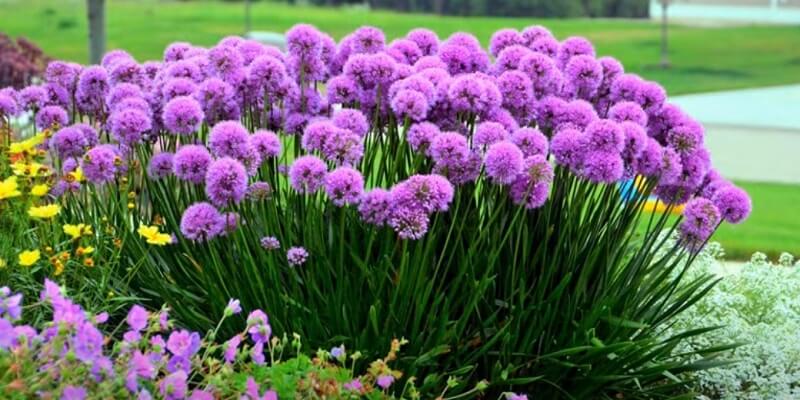
Plants That Ward off Ants
Not all plants are the same in the eyes of ants. Some have characteristics that make them less attractive and act as a natural deterrent.
Here’s what ants tend to avoid:
The aromatic properties of mint make it an undesirable place for ants. Grow mint in containers to prevent it from spreading aggressively.
Ants do not like the strong odor of lavender. Prune lavender regularly to encourage its growth and enhance its scent.
Chrysanthemums- these brightly colored flowers contain a natural insect repellent called pyrethrin. Planting chrysanthemums will help deter ants and other pests.
Basil-In addition to its culinary uses, basil contains oils that ants don’t like. Harvest basil regularly for culinary purposes so that it spreads its flavor better.
Plant these plants along your garden borders or near entry points. Place among vulnerable plants. Water the plants regularly so that they retain their strong odor. Group aromatic plants such as mint, lavender and basil into specific areas. Add new plants as needed to keep the ant population under control.
These plants can be planted in the garden or grown in pots on a windowsill.
What to Сhoose
If the ants are few, you can try to get rid of them with mechanical methods. If the infestation is severe, chemical or biological methods should be used.
Mechanical or chemical methods should be used if ants live in hard-to-reach places, such as anthills. If ants live on the soil’s surface, you can try to eliminate them using biological methods.
Although mechanical ant control methods are effective, they are also the most labor-intensive. Chemical methods of ant control are also effective, but they are also more dangerous. Biological and control methods are the safest but can be less effective than mechanical or chemical methods.
Ultimately, choosing an ant control method is a personal choice for the gardener. I recommend using whichever method you feel will be most effective and safest for your garden.
Control of Ants in the Compost Heap
Ants in compost are a fairly common problem. Ants are attracted to sweet and meaty foods often found in compost.
- Ants are often attracted to drought conditions. Make sure your compost pile maintains a balanced moisture level.
- Ants may be attracted to nitrogen-rich kitchen scraps. Add more carbon-rich materials such as dry leaves, straw or shredded newspaper.
- Ants are less likely to live in a hot compost pile. Ensure your compost pile is actively breaking down organic matter while generating heat.
- Turning your compost pile regularly promotes decomposition and destroys ant nests.
- Use a pitchfork or tedder to aerate the compost regularly.
Using these methods, you can create an environment in your compost heap that is less attractive to ants but still promotes decomposition.
When it’s Worth Considering Hiring Professional Help
If your garden has become a constant battleground and the efforts you’ve made with your own hands seem only temporary, it may be time to call in the experts.
When ants keep coming back, it’s a sign that a deeper problem needs professional attention.
It may be beyond do-it-yourself solutions if you notice multiple ant colonies or a massive infestation. Professionals can assess the extent of the infestation and implement targeted strategies.
Ants causing structural damage or infiltrating your home indicate a serious problem that requires immediate attention. Don’t wait until it’s too late; professional help can prevent further damage.
Prevent Ants From Returning to the Garden
Ants are attracted to crumbs, fallen fruit, and other food debris like magnets.
Clean up fallen fruit, crumbs, and spills regularly. Seal cracks, crevices, and entry points to limit easy access. Periodic application of diatomaceous earth creates an unfavorable environment for ants. Inspect your garden regularly for signs of ant activity.
Consider using ant-resistant mulch, such as cedar or cypress, which are less likely to attract ants. Ensure the mulch is not too deep, as this can create a favorable environment for ants. Weed and loosen the soil regularly. This will help reduce the number of ant hills.
Destroy ant hills as soon as you notice them. The sooner you do this, the easier it will be to get rid of the ants.
Clean out garbage cans regularly. Ants love to explore garbage cans in search of goodies. Make it a habit to take out the trash regularly, especially if it contains food scraps.
Trim overhanging branches. Overhanging branches can serve as ant pathways into your garden. Trim them to limit the number of access points.
Keep beds clean. Remove fallen leaves and debris from beds. Ants love hiding places, and a lack of clutter in the environment makes it difficult for them to establish colonies.
Conclusion
There are many ways to get rid of ants in the garden. The choice of method depends on the degree of infestation and the gardener’s preferences. If safety measures are followed, getting rid of ants without harming humans and the environment is possible.